eu law
When Judicial Governance Becomes Political: What the Weimers Report Means for Contracts Crossing EU Borders
A Draft Report That Signals Something Larger
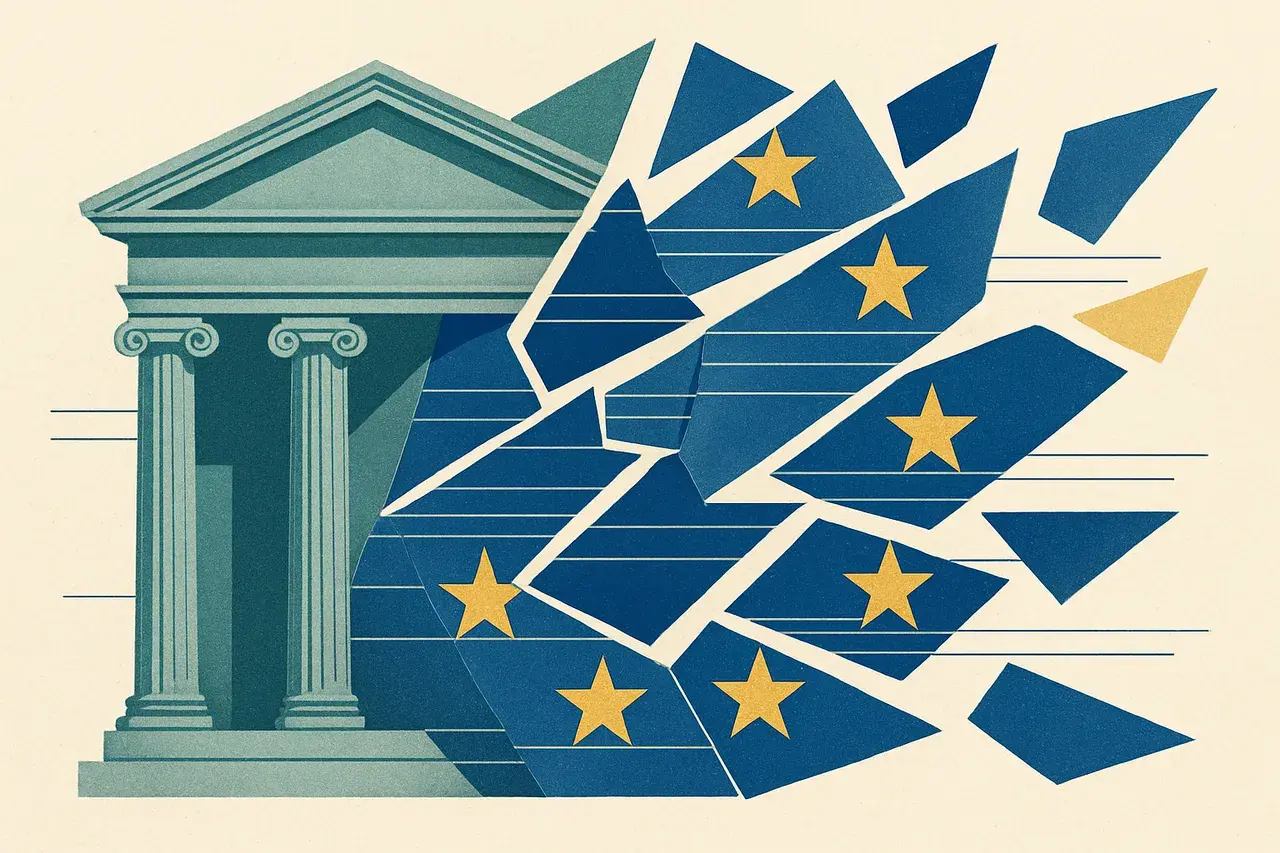
On 29 June 2025, European Parliament rapporteur Charlie Weimers published a draft report examining how EU institutions, and the Court of Justice in particular, interact with national authorities under Article 19 TEU. A public hearing followed in July. The report is, on its surface, a constitutional affairs document. In practice, it is a signal that the CJEU's governance arrangements, long treated as a matter for the Court itself, are now firmly on the political agenda.
The Court has historically been reluctant to open its internal governance to external scrutiny. That posture is becoming harder to maintain as national governments, parliaments, and now the European Parliament itself push for greater transparency about how judicial appointments are made, how conflicts of interest are managed, and how the Court decides which cases merit a hearing. Whatever one thinks of the Weimers Report's specific proposals, the broader dynamic it represents is real: the institutional settlement around EU adjudication is under active renegotiation.
For commercial lawyers and in-house counsel, that matters more than it might first appear.
Jurisdiction Clauses Are Not Neutral
Every cross-border commercial agreement that touches EU law contains, explicitly or implicitly, assumptions about how that law will be interpreted and enforced. Jurisdiction clauses, governing law clauses, and dispute resolution provisions are not merely procedural boilerplate. They are bets on the stability and predictability of a legal system.
When the governance of the EU's apex court becomes contested, those bets become harder to price. If parliamentary pressure leads to changes in how judges are appointed or how preliminary references are managed, the interpretive consistency that makes EU law commercially usable could be disrupted, even incrementally. A change that looks modest in constitutional terms can, over time, alter the risk profile of a contract that runs for five or ten years.
This is not a reason to panic, or to avoid EU-law-governed agreements. It is a reason to read governing law and jurisdiction provisions with greater care, and to understand what they are actually committing a party to.
What In-House Teams Should Be Asking
The practical question for general counsel is not whether the Weimers Report will pass in its current form. It may not. The question is what it reveals about the direction of travel, and whether existing contract portfolios are adequately reviewed in that light.
Several considerations follow. First, long-term agreements that depend on consistent EU regulatory interpretation, particularly in sectors like financial services, digital markets, or pharmaceuticals, carry a form of legal-system risk that is rarely named explicitly in risk registers. Second, dispute resolution clauses that route everything to national courts applying EU law are making an assumption about the coherence of that law which deserves periodic reassessment. Third, MAC clauses and material adverse change provisions in M&A and investment agreements rarely contemplate shifts in judicial governance as a trigger, even when the underlying transaction is entirely EU-facing.
None of these are new vulnerabilities. What is new is that the political environment is now actively surfacing them.
How AI-Assisted Contract Review Changes the Calculus
This is precisely the kind of analysis that a well-configured AI CLM platform can support at scale. Adira reads contracts from the client's perspective, understands the governing law of the jurisdiction in question, and can flag provisions whose enforceability or interpretation depends on assumptions about regulatory or judicial stability.
In a portfolio of hundreds of EU-law-governed agreements, a manual review of jurisdiction clauses, governing law provisions, and dispute resolution mechanisms is neither fast nor consistent. An AI layer that understands, for example, that a CJEU preliminary reference mechanism underpins how a particular regulatory term will be interpreted, can surface that dependency in a way that a keyword search cannot.
The Weimers Report is a reminder that legal risk is not static. Contracts drafted in 2020 under one set of assumptions about EU institutional stability may need to be read differently in 2026. Systematic, jurisdiction-aware contract analysis is what makes that kind of portfolio-wide reassessment possible without overwhelming a legal team.
The Broader Point About Institutional Risk
Legal professionals are trained to treat institutional frameworks as background conditions rather than live variables. Courts exist, they interpret law, and contracts are enforced accordingly. The European experience of the past decade, from the Polish and Hungarian rule-of-law crises to the current debate around CJEU governance, is a reminder that institutions are not furniture. They are themselves contested and subject to political pressure.
The Weimers Report may or may not produce concrete reforms. What it has already done is make visible a question that commercial lawyers should be sitting with: when the institutions that give legal certainty their meaning are themselves uncertain, how do you build that into the agreements you are asked to advise on, negotiate, or sign?
That is not a question with a tidy answer. But it is a question that belongs in the CLM conversation, not just the constitutional law seminar.
See how Adira drafts in your voice and reads contracts from your side.
Explore the showroomWorking through a contract like this? Weave is Adira’s free tool to read, mark up, and connect any contract in your browser — no account needed.
Try Weave — free