regulatory change
Wolf Management Executive Order: Regulatory and Contract Risks for Ranchers and Agribusiness
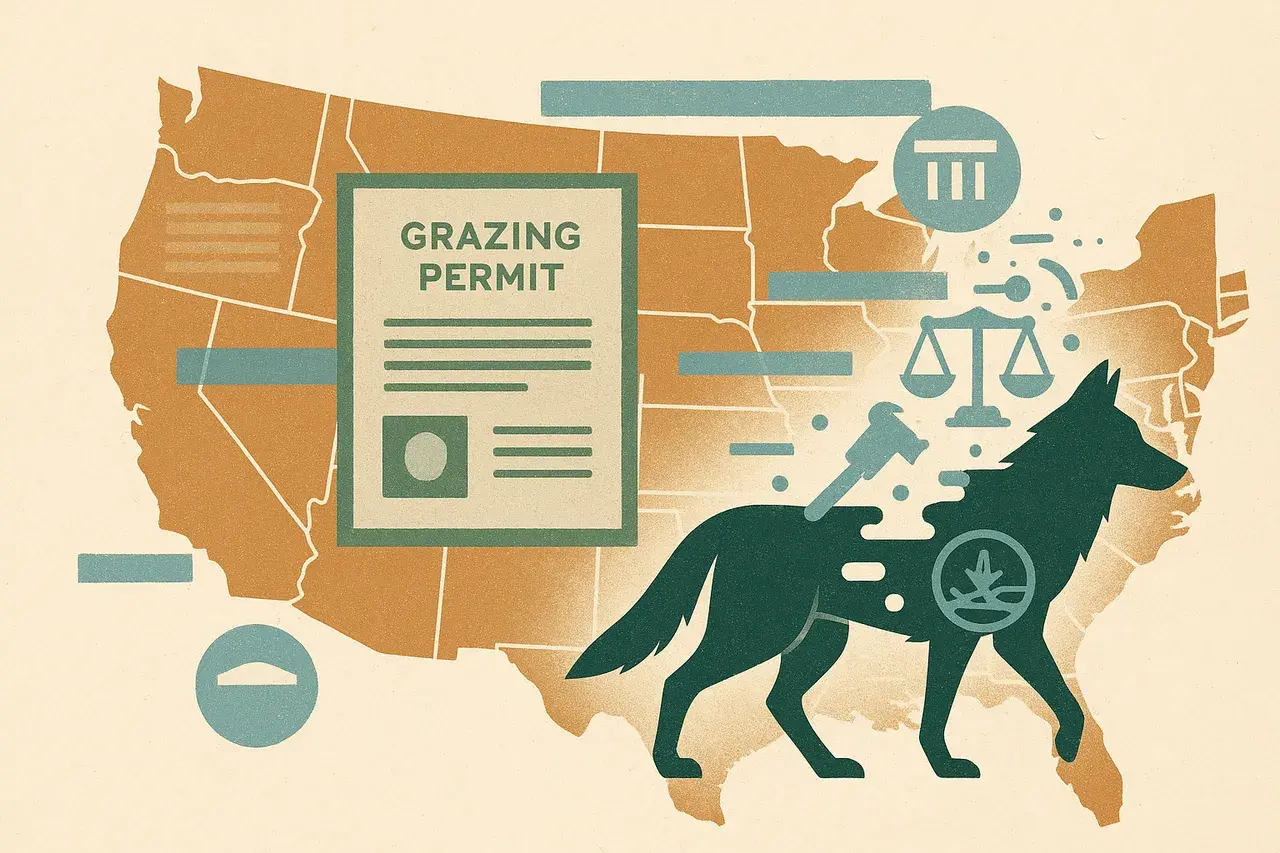
What the Executive Order Actually Directs
President Trump's Executive Order on wolf management does not itself rewrite wildlife law, but it sends a clear federal signal: the USDA is now urging states to revisit their own wolf management frameworks and to formalise engagement with ranching communities. That kind of top-down policy nudge has a well-documented downstream effect. State agencies respond by revising permits, altering compensation programme criteria, and, in some cases, opening public comment periods that affect how federal grazing allotments are administered. In-house legal teams at agribusinesses, livestock cooperatives, and rural insurers should treat the Order as the beginning of a regulatory change cycle, not a one-off announcement.
Grazing Permits and Federal Land Use Contracts Are the First Point of Exposure
For any operation running livestock on federal land under a Bureau of Land Management or US Forest Service permit, wolf management policy is not an abstract conservation debate. Grazing permits incorporate the relevant state and federal wildlife management plans by reference, meaning that when those plans change, the operational conditions attached to a permit can change with them. Ranchers and their counsel should pull current permit language now and map which clauses reference wildlife management plans, predator control obligations, or herd protection requirements. If a state decides, in response to the USDA's urging, to open new zones to lethal wolf control or to restrict it further depending on local political pressures, the operational reality of that permit shifts accordingly. Contracts that were commercially viable under one set of conditions may require renegotiation or a force-majeure review under another.
Livestock Insurance Policies: Predation Clauses Under Scrutiny
Livestock predation insurance is a specialist line, and the policy language in this market is notoriously inconsistent. Some policies pay on confirmed kills; others require verification by a state or federal wildlife officer, which is a process that can take weeks and may become more or less accessible depending on how staffed and mandated state wolf management agencies are after the review the USDA has requested. If your agribusiness client carries predation cover, this is the moment to audit the verification and notification clauses. A change in state agency procedure, for example moving from mandatory investigation to advisory-only response, can trigger gaps in coverage that no one anticipated when the policy was placed. Brokers and risk managers should be looped in alongside legal counsel.
Supply Chain and Procurement Contracts: The Hidden Wolf-Policy Risk
The less obvious contractual exposure sits in supply chain agreements. Meatpacking companies, food manufacturers, and retailers sourcing from affected ranching regions often include supply continuity and volume guarantee clauses in their procurement contracts. A sustained increase in livestock losses from predation, or a period of operational disruption while ranchers adapt to new management rules, can push suppliers into breach territory or trigger material-adverse-change provisions. In-house teams at buyers should review force-majeure and MAC definitions in active supplier agreements. The question to ask is whether a regulatory-driven disruption to herd management qualifies under the existing language. In many standard-form agreements it will not, which is an argument for renegotiating those provisions before losses accumulate.
USDA Compensation Programmes: Eligibility Rules May Shift
The USDA operates predation compensation programmes, most notably through the Farm Service Agency, that pay ranchers for confirmed livestock losses attributed to wolves. The political context created by the Executive Order makes it more likely that eligibility criteria, payment caps, or documentation requirements will be revised in the next administrative cycle. Operations that currently rely on compensation receipts as a predictable revenue offset should not treat those figures as fixed in financial modelling or in representations made to lenders. Loan agreements and agricultural credit facilities that reference USDA programme income as part of a borrower's cash-flow picture should be flagged for review.
What In-House Counsel Should Do Before State Reviews Conclude
The USDA's request for state-level reviews creates a defined, if uncertain, window. Most state agencies will take between six and eighteen months to produce revised management plans after a federal directive of this kind. That window is the time to act. Legal teams should audit all grazing permits and identify wildlife-plan cross-references. They should review livestock insurance policies for predation verification gaps. They should read supply-chain force-majeure clauses with predator-related disruption specifically in mind. And they should flag any lender or investor documents that treat USDA compensation income as a stable input. The Executive Order does not create immediate liability, but the regulatory cascade it initiates almost certainly will create contract disputes if businesses wait until state plans are final before taking stock of their exposure.
Frequently asked questions
- Does the wolf management Executive Order directly change ranchers' legal obligations?
- Not immediately. The Order directs the USDA to urge states to review their wolf management policies, which then triggers state-level regulatory processes. The legal obligations for ranchers will change when individual states revise their management plans, permits, and compensation programme rules in response.
- How does wolf policy affect grazing permits on federal land?
- Federal grazing permits typically incorporate state and federal wildlife management plans by reference. When those plans are revised, the operational conditions of the permit can change, potentially affecting herd protection requirements, predator control rules, and overall permit viability.
- Do ranchers need to update their contracts after the wolf executive order?
- Ranchers and agribusinesses should review, not necessarily immediately rewrite, their grazing permits, livestock insurance policies, and any supply-chain volume agreements. The goal is to identify clauses that could be affected by upcoming state regulatory changes so that renegotiation can happen proactively rather than reactively.
- Can a change in wolf management policy trigger force majeure in a supply contract?
- It depends on the specific contract language. Many standard-form agricultural supply agreements define force majeure narrowly and may not cover regulatory-driven disruptions to herd management. Buyers and suppliers should review their current definitions and consider whether an amendment is needed to address this risk category.
- Will USDA predation compensation payments change because of the Executive Order?
- The Executive Order creates political momentum that could lead to revisions in eligibility criteria, documentation requirements, or payment caps for USDA predation compensation programmes. Businesses that model this income as stable should treat it as subject to change and flag it in any financial representations to lenders or investors.
See how Adira drafts in your voice and reads contracts from your side.
Explore the showroomWorking through a contract like this? Weave is Adira’s free tool to read, mark up, and connect any contract in your browser — no account needed.
Try Weave — free