legal ai
When AI Infrastructure Shakes, Contract Risk Wakes Up
The Fragility Beneath the Confidence
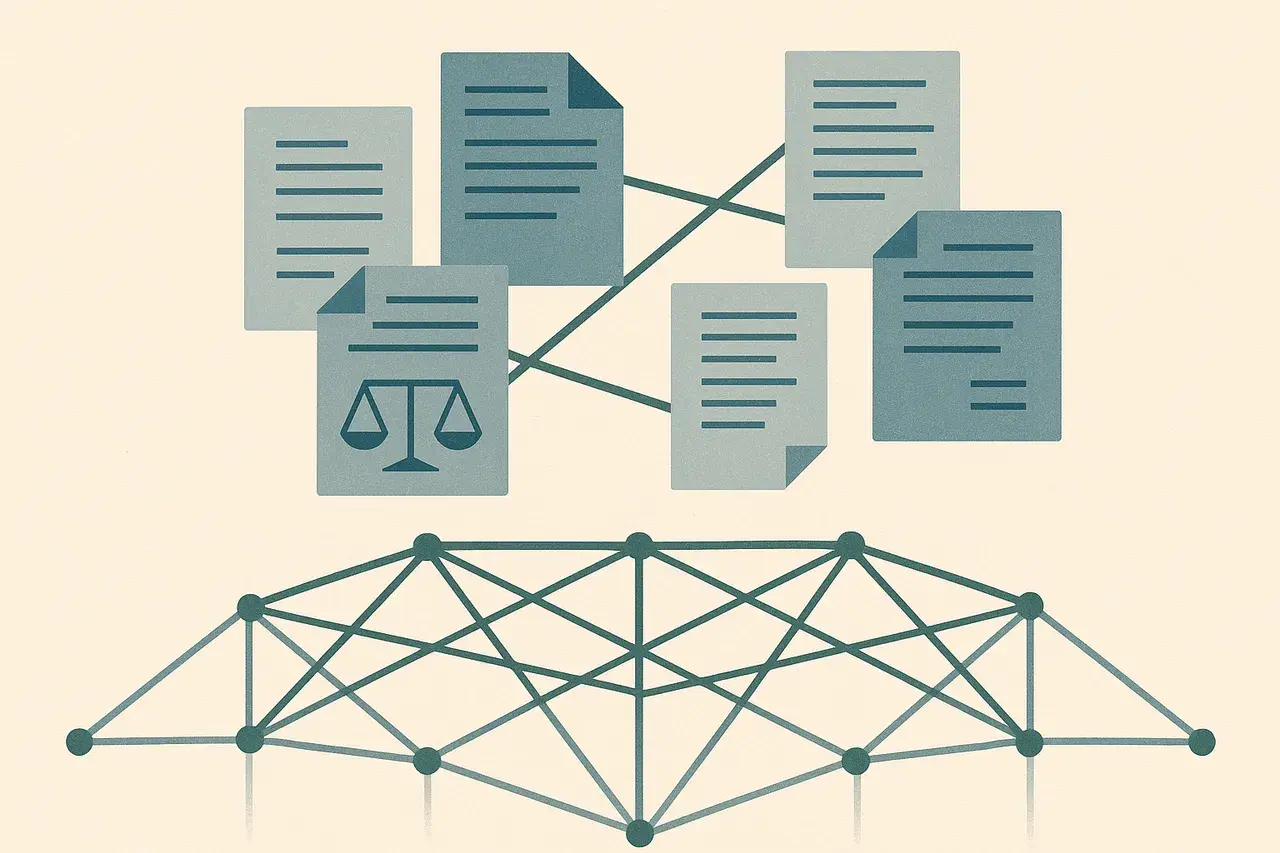
The legal technology market spent much of the past two years convincing general counsel that AI was ready for serious work. Then came a sharp reminder that the infrastructure underpinning these tools is itself a point of risk. When a major AI model experiences a significant outage, the ripple effects move well beyond engineers and product teams. They reach the in-house lawyer who was relying on an automated clause extraction to meet a board deadline, and the law firm partner whose client-facing tool went silent mid-negotiation.
This is not a reason to distrust AI in legal work. It is a reason to think carefully about how that AI is embedded in your workflows, and what your fallback looks like when a third-party model provider stumbles.
Vendor Concentration Is a Contract Problem
Most in-house teams are rightly focused on the counterparty risk hidden inside their supplier and customer contracts. Fewer have turned that same analytical lens on their own legal technology stack. Yet the dependencies are real. A CLM platform that routes all its intelligence through a single large language model provider carries a concentration risk that any competent risk committee would flag if it appeared in a supply chain agreement.
The sensible response is not to avoid AI tools. It is to ask the right due diligence questions before signing. Which model providers does this platform depend on? What is the contractual service level for AI-powered features specifically? Is there a degraded-but-functional mode when the underlying model is unavailable? These are contract questions, and in-house teams are well placed to ask them.
What Market Corrections Reveal About Real Value
Beyond outages, the broader market correction in legal AI valuations is clarifying something useful. The enthusiasm of 2023 and 2024 attracted capital to products that were, in some cases, demonstrations dressed as solutions. As sentiment normalises, the tools that survive will be those that do specific legal work reliably, not those that generated the most impressive conference demos.
For contract work in particular, the distinction matters enormously. A general-purpose AI assistant that can summarise a document is useful. A system that reads an NDA from your side of the table, applies the governing law of the relevant jurisdiction, flags deviations from your own playbook, and drafts redlines in language your legal team actually uses, is something categorically different. The former is a productivity nudge. The latter is a workflow transformation.
Platforms that have built their core around contract-specific legal reasoning, rather than wrapping a general model in a legal-looking interface, are better positioned to weather both model outages and investor recalibration. The legal knowledge is theirs. The model is a component.
The Nordic Signal and the Global Pattern
The continued emergence of legal innovation hubs in Scandinavia is worth noting for reasons that go beyond geography. Nordic in-house teams have historically combined a strong tradition of plain-language contracting with a pragmatic appetite for technology adoption. That combination makes them useful early indicators of what enterprise legal teams globally will want in twelve to eighteen months.
What those teams consistently report wanting is not novelty. They want tools that reduce the gap between signing a contract and actually understanding what it commits the organisation to. They want AI that works in the languages and legal frameworks their business operates in, not a system trained primarily on American case law and anglophone contract norms. Jurisdictional fluency is becoming a genuine differentiator, and buyers in markets with distinct legal traditions are starting to demand it explicitly.
Resilience as a Feature, Not an Afterthought
The practical lesson for legal operations leaders is straightforward. When evaluating any AI CLM platform, resilience deserves the same weight as capability. That means architectural resilience, specifically how the platform behaves when a model provider is degraded. It means data resilience, meaning your contract corpus and extracted metadata remain accessible and portable regardless of what happens upstream. And it means workflow resilience, so that the human review steps are not so deeply buried under automation that a temporary AI failure creates a contractual backlog.
Adira is built around the premise that a CLM should know your organisation's own voice, apply the law of the jurisdiction it is working in, and read every contract from your side of the relationship. That orientation is partly about quality of output. It is also about resilience. When the AI component does the right kind of narrow, well-defined legal work, it fails more gracefully and recovers more quickly than a system attempting to do everything at once.
Market corrections are uncomfortable. They are also clarifying. Teams that use this moment to ask harder questions of their legal technology vendors will be better positioned than those who simply wait for sentiment to recover.
See how Adira drafts in your voice and reads contracts from your side.
Explore the showroomWorking through a contract like this? Weave is Adira’s free tool to read, mark up, and connect any contract in your browser — no account needed.
Try Weave — free