global legal
Maritime Interdiction and Contract Risk: What the US–Ecuador Fishing Boat Dispute Means for Global Trade Contracts
The Incident That Every Maritime Lawyer Should Be Reading
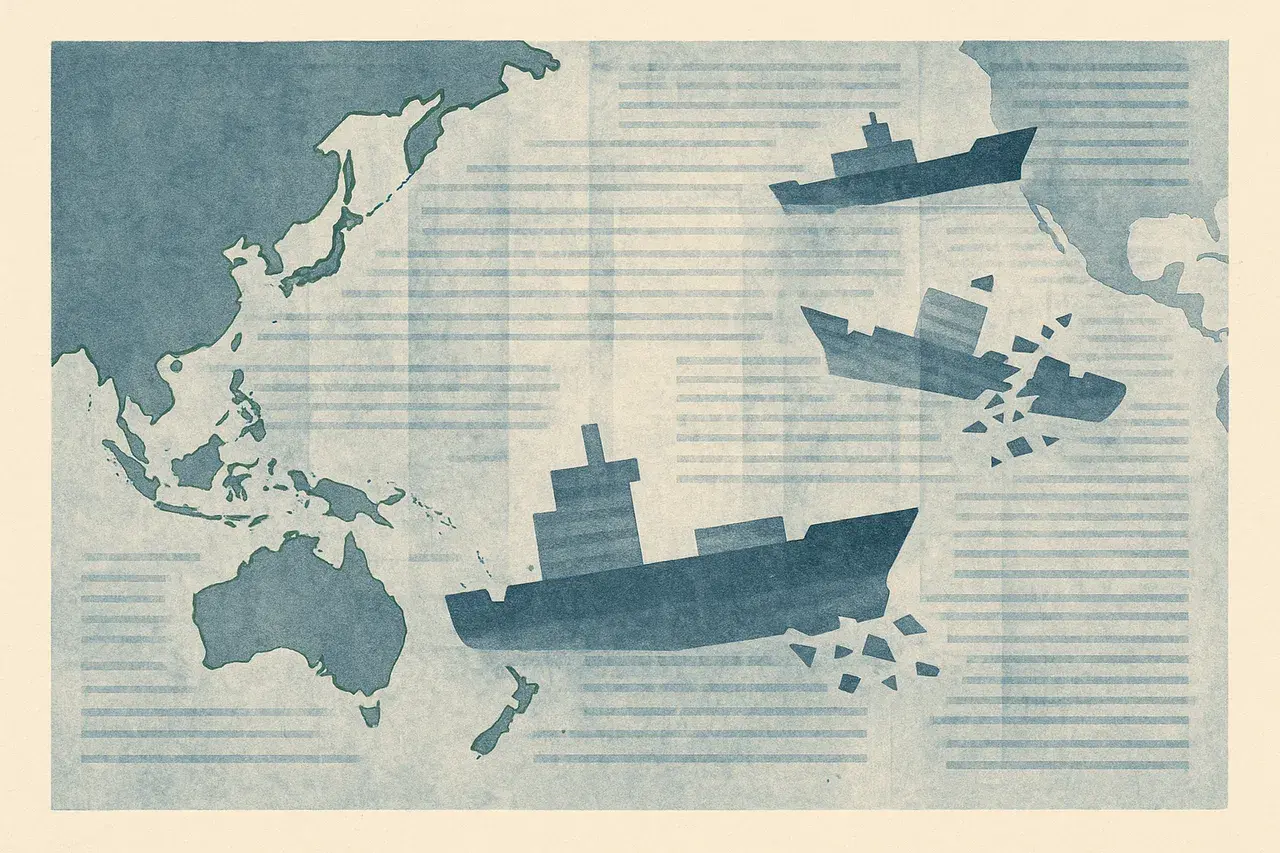
Between late August and mid-September 2025, US naval forces intercepted and destroyed eight Ecuadorian fishing vessels in the Pacific, detaining more than 140 crew members in operations framed as counter-narcotics and anti-human-trafficking efforts. Human Rights Watch reported that some detainees were allegedly subjected to abuse, and its Americas director stated that intercepting people without evidence cannot constitute a lawful arrest. Ecuador's government has formally protested. The episode sits at the crossroads of international maritime law, bilateral treaty obligations, and the kind of operational risk that general counsel at shipping companies, commodity traders, and marine insurers may never have stress-tested in their standard-form contracts.
For global legal teams, the immediate question is not purely political. It is contractual and operational: if a vessel operating lawfully under its flag state's licence is seized or destroyed by a foreign military power, what does your contract say, and does it protect you?
Who Has the Legal Authority to Interdict at Sea
The legal framework for maritime interdiction derives primarily from the United Nations Convention on the Law of the Sea (UNCLOS) and a patchwork of bilateral ship-rider agreements. Under UNCLOS, vessels on the high seas generally enjoy the exclusive jurisdiction of their flag state. Exceptions exist for piracy, slave trading, and unauthorised broadcasting, but drug trafficking interdiction on the high seas requires either flag-state consent or a specific bilateral agreement.
The United States has concluded ship-rider agreements with a number of Latin American nations, granting US forces the right to board and, in certain circumstances, pursue vessels suspected of narcotics trafficking. Whether Ecuador's vessels fell within the scope of any such agreement, and whether the evidentiary threshold for destruction of the vessels was met, remains disputed. That legal ambiguity is precisely the environment in which contractual protections either hold or fail.
How Vessel Seizure and Destruction Affects Commercial Contracts
The destruction of a vessel is not a routine peril addressed by boilerplate shipping contracts. Standard voyage charterparty and time charterparty forms allocate risk between shipowners and charterers, but they rarely contemplate the total physical destruction of the vessel by a foreign state actor on the high seas without a judicial process.
Several contractual pressure points emerge immediately. First, force majeure clauses: most contracts include force majeure provisions covering government action, but the drafting matters enormously. A clause that covers only domestic government orders may not capture an action by a foreign military power. A clause that requires the event to be unforeseeable may be contested if the vessel was operating in a known interdiction zone. Second, frustration of purpose: where the vessel is destroyed rather than merely detained, English law doctrine of frustration may terminate the contract, but the consequences for freight prepayment, deadfreight claims, and cargo liability are far from automatic. Third, cargo contracts: bills of lading and sale contracts governed by the Hague-Visby Rules do not clearly allocate the loss where a carrier's vessel is destroyed by state action rather than a natural peril.
Insurance is a related concern. War risk and political risk policies may or may not respond depending on whether the interdicting state is formally at war with the flag state, and many standard marine cargo policies contain government seizure exclusions that could be read broadly.
Drafting Recommendations for GCs Operating in High-Risk Maritime Corridors
General counsel advising companies with maritime exposure in Latin American waters, West African corridors, or any zone subject to active US counter-narcotics operations should audit their contracts against several specific questions.
First, does your force majeure clause expressly cover seizure, detention, or destruction by foreign state forces, whether or not those forces are acting lawfully? Limiting the clause to acts of the contractual party's home government is a common but dangerous oversight. Second, does the clause require formal legal proceedings before triggering? If so, unilateral destruction without judicial process may fall outside its scope. Third, are your notice obligations realistic? A crew detained at sea cannot give a contractual notice of force majeure within 48 hours. Fourth, does your contract address partial performance, for example where some cargo survives a seizure even if the vessel does not?
Beyond force majeure, consider inserting a specific government action clause modelled on those used in oil and gas contracts, which allocates risk according to the legality of the government action and provides for compensation recovery mechanisms where the action is subsequently found to be unlawful.
The Human Rights Dimension and Its Legal Consequences
The allegations of crew mistreatment carry legal weight beyond the humanitarian concern. If crew members were detained without evidence and subjected to abuse, claims may arise under customary international human rights law, potentially against both the United States and Ecuador depending on the chain of custody. For corporate actors, crew welfare obligations under the Maritime Labour Convention 2006 and ISM Code do not disappear because a state actor is the wrongdoer. Shipowners may face claims from crew or their families, and employment contracts that do not address detention by foreign military forces leave both parties in an uncertain position.
Law firms advising shipowners should review crew employment agreements to ensure they address pay continuation during detention, repatriation obligations following vessel loss, and access to consular assistance.
Jurisdictional Complexity and the Choice of Law Problem
A destruction or seizure event in international waters involving a vessel flagged in one state, chartered by a company in a second, carrying cargo owned by a third, and interdicted by a fourth creates immediate choice of law and choice of forum disputes. English law, US law, Ecuadorian law, and UNCLOS each have potentially applicable rules, and they do not always point in the same direction.
Contracts that specify a single governing law without addressing the extraterritorial reach of that law, or that rely on arbitration clauses silent on interim relief, are poorly positioned to respond quickly. Adira's contract analysis capabilities allow legal teams to scan their entire portfolio of maritime agreements for these gaps systematically, identifying which contracts need amendment before the next incident, not after.
The US-Ecuador fishing boat dispute is a reminder that geopolitical risk is also contractual risk. The teams that respond most effectively will be those whose contracts were already written for the world as it is, not the world as they hoped it would be.
Frequently asked questions
- Can the US legally destroy foreign fishing boats on the high seas?
- Under international law, vessels on the high seas generally fall under the exclusive jurisdiction of their flag state. The US may interdict foreign vessels under bilateral ship-rider agreements or if there is flag-state consent, but destruction of a vessel without judicial process is legally contested and may violate UNCLOS and customary international law.
- Does a force majeure clause cover vessel seizure by a foreign military?
- It depends on the drafting. Many force majeure clauses cover government action but only from the contracting party's home government, which would not capture seizure by a foreign naval force. GCs should ensure their clauses expressly include seizure, detention, or destruction by any state actor, whether or not that action is subsequently found to be lawful.
- What happens to a cargo contract when a vessel is destroyed by foreign forces?
- The outcome depends on the governing law and the specific contract terms. Under English law, the contract may be frustrated, but freight prepayments, deadfreight claims, and cargo liability are not automatically resolved. Parties should review their bills of lading and sale contracts for specific government action clauses.
- Are shipowners liable for crew mistreatment during a military interdiction?
- Shipowners have continuing obligations under the Maritime Labour Convention 2006 and ISM Code regarding crew welfare. While the state conducting the interdiction bears primary responsibility for any abuse, shipowners may face claims from crew or their families if employment contracts do not address pay continuation, repatriation, and consular access during detention.
- Which law governs a dispute when a vessel is seized in international waters?
- Seizure events in international waters typically trigger competing claims under the flag state's law, the law governing the charter or cargo contract, and UNCLOS. Without clear choice of law and forum clauses that address extraterritorial state action, disputes can become protracted multi-jurisdictional proceedings.
See how Adira drafts in your voice and reads contracts from your side.
Explore the showroomWorking through a contract like this? Weave is Adira’s free tool to read, mark up, and connect any contract in your browser — no account needed.
Try Weave — free