trade policy
Trump Tariffs 2025: The Contract and Compliance Fallout In-House Teams Must Act On Now
Why Tariffs Are Now a Contracts Problem, Not Just a Trade Problem
Tariffs are taxes imposed by a government on imported goods, collected at the border from the importing party. When the United States raises tariff rates, the immediate financial hit lands on the importer of record, but the downstream contractual consequences ripple across every agreement that touches price, delivery, or sourcing. The Trump administration's broad use of tariffs in 2025, justified variously on national security, trade-deficit, and reciprocity grounds, has produced some of the most significant cost shocks to global supply chains in decades. For in-house legal and procurement teams, the question is no longer whether tariffs will affect your contracts. It is which clauses govern that impact, and whether they are fit for purpose.
How Tariff Increases Interact With Existing Contract Terms
Most long-term commercial contracts were written when tariff risk was a background consideration rather than a front-line variable. That creates three immediate pressure points.
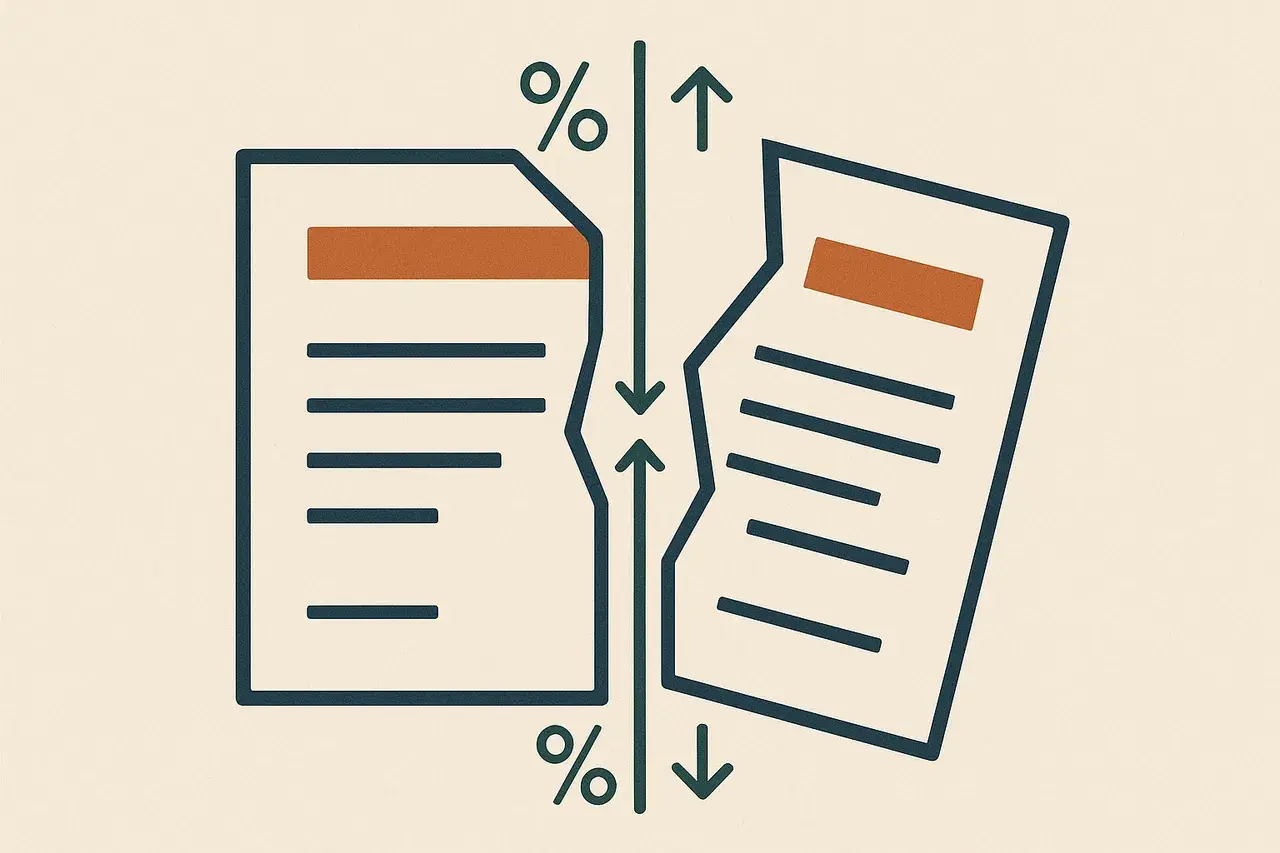
First, fixed-price agreements. Where a supplier agreed to supply goods at a set price, a sudden 25 percent or higher import duty destroys the commercial logic of that arrangement. Unless the contract contains an explicit price-adjustment or cost-escalation clause covering government-imposed levies, the supplier bears the loss or defaults.
Second, force majeure clauses. Parties facing unworkable economics are dusting off their force majeure provisions and asking whether a tariff increase qualifies as a triggering event. The answer depends heavily on drafting. Most well-drawn force majeure clauses cover government action or changes in law, but courts on both sides of the Atlantic have historically been reluctant to treat foreseeable regulatory change as a force majeure event, particularly where the risk was politically visible before signing.
Third, hardship and material adverse change provisions. Some contracts, particularly those governed by civil-law jurisdictions or drafted with international principles in mind, include hardship clauses that allow renegotiation where performance becomes fundamentally burdensome. These are now being invoked with real frequency.
Specific Clauses to Audit Right Now
In-house teams should run an immediate audit of their contract portfolio against the following provisions.
Price adjustment clauses: Does the clause cover import duties and government-imposed levies, or only raw-material indices? Many standard escalation clauses reference commodity benchmarks and say nothing about border taxes.
Tariff pass-through language: Some supply agreements explicitly allocate tariff risk to the buyer. Others are silent. Silence is dangerous and typically resolved by reference to the Incoterms rule in the contract, since under DDP terms the seller bears import costs, while under EXW or FOB terms the buyer does.
Termination for convenience and change-in-law provisions: A change-in-law clause that allows either party to terminate or renegotiate where legislation materially alters the cost base may be the cleanest exit route where a tariff makes performance commercially irrational.
Most-favoured-nation and benchmarking clauses: Where your contract benchmarks price against market rates, tariff-distorted markets may produce anomalous results that require contractual adjustment.
Regulatory and Compliance Obligations Triggered by the Tariff Regime
Beyond the bilateral contract relationship, the expanded US tariff programme creates direct compliance obligations. Companies sourcing from affected jurisdictions must review their customs classification and country-of-origin determinations, since misclassification now carries materially higher financial exposure. The US Bureau of Industry and Security and Customs and Border Protection have both increased scrutiny of origin claims, particularly where goods transit third countries.
Sanctions intersect with tariff policy in cases where restricted jurisdictions are also subject to elevated duties. A supply chain restructure designed to avoid tariffs must be stress-tested against US sanctions rules, Export Administration Regulations, and, for European subsidiaries, EU dual-use and autonomous sanctions regimes. Cost optimisation that inadvertently routes goods through a sanctions-sensitive jurisdiction creates a liability that dwarfs any tariff saving.
Compliance teams should also note that retaliatory tariffs imposed by trading partners, including the EU, China, and Canada, create mirror obligations in the opposite direction for US exporters. Any contract governed by a framework that assumed open-market access may now need a jurisdiction-specific review.
What In-House Teams Should Renegotiate or Insert Going Forward
For contracts currently under renegotiation or at drafting stage, the lesson of 2025 is clear: tariff risk must be explicitly allocated rather than left to implication.
The provisions most worth negotiating are a defined tariff pass-through mechanism that specifies which party bears increases above a stated baseline, a renegotiation trigger set at a quantified cost-impact threshold (for example, a five percent increase in landed cost), a supply-chain diversification right allowing the buyer to approve alternative sourcing without triggering breach, and country-of-origin representations with ongoing notification obligations where the supplier's manufacturing footprint changes.
AI contract platforms can assist significantly here. Adira, for instance, reads your existing contracts from your side of the table, flags clauses that leave tariff risk unallocated, and drafts jurisdiction-appropriate replacement language calibrated to the governing law. That matters because a hardship clause appropriate for a contract governed by French law differs structurally from one suitable for New York or English law.
The Strategic Takeaway for Legal and Procurement Leadership
Tariff policy under the current US administration is being used as a live instrument of economic statecraft, meaning rates can move quickly and unpredictably. Contracts written for a stable tariff environment are now operating in a volatile one. The companies that will manage this best are those that treat tariff risk as a standard contractual variable alongside currency, commodity price, and regulatory change, not as an exceptional event to be handled reactively.
The immediate priorities are portfolio triage to identify the most exposed agreements, targeted renegotiation of price and risk-allocation terms, compliance review of origin and classification positions, and prospective drafting standards that build resilience into new agreements from day one.
Frequently asked questions
- Can a tariff increase trigger a force majeure clause in a commercial contract?
- It depends on how the force majeure clause is drafted. Clauses covering 'government action' or 'changes in law' may apply, but courts generally treat foreseeable regulatory change, including politically signalled tariff increases, as a commercial risk rather than a force majeure event. Parties should review the specific language and the governing law before relying on this argument.
- Who bears the cost of US tariffs under a standard supply contract?
- Tariff liability under a supply contract is primarily determined by the Incoterms rule and any explicit tariff allocation language. Under DDP terms the seller is responsible for import duties; under FOB or EXW the buyer bears them. Where the contract is silent on tariff increases beyond a baseline rate, the allocation is ambiguous and potentially disputed.
- What contract clauses should I add to protect against future tariff increases?
- The most effective protections are a quantified tariff pass-through mechanism, a renegotiation trigger keyed to landed-cost impact, supply-chain diversification rights, and ongoing country-of-origin notification obligations. These should be tailored to the governing law of the contract, since the legal standards for hardship and price adjustment vary by jurisdiction.
- How do Trump tariffs affect supply-chain compliance obligations?
- Elevated tariff rates increase the financial exposure from customs misclassification and incorrect origin determinations, making compliance reviews urgent. Companies restructuring supply chains to reduce tariff costs must also screen alternative routes against US sanctions and export control rules, since tariff optimisation and sanctions compliance are not the same exercise.
- What is a tariff escalation clause in a contract?
- A tariff escalation clause is a contractual provision that adjusts the contract price automatically, or triggers a renegotiation right, when government-imposed import duties change beyond a defined threshold. It explicitly allocates tariff risk between the parties and avoids the ambiguity of relying on general price-adjustment or force majeure language.
See how Adira drafts in your voice and reads contracts from your side.
Explore the showroomWorking through a contract like this? Weave is Adira’s free tool to read, mark up, and connect any contract in your browser — no account needed.
Try Weave — freeRelated reading
Supreme Court Trucking Ruling: What the FAAAA Preemption Decision Means for Your Logistics Contracts
24 August 2026
California Supreme Court Product Liability Ruling: What It Means for Your Contracts
7 August 2026
When the Executive Attacks the Judiciary: What Trump's Supreme Court Criticism Means for the Rule of Law and Contracts
20 September 2026