contract risk
What Supreme Court Rulings Mean for Commercial Contracts: A 2025 Legal Risk Guide
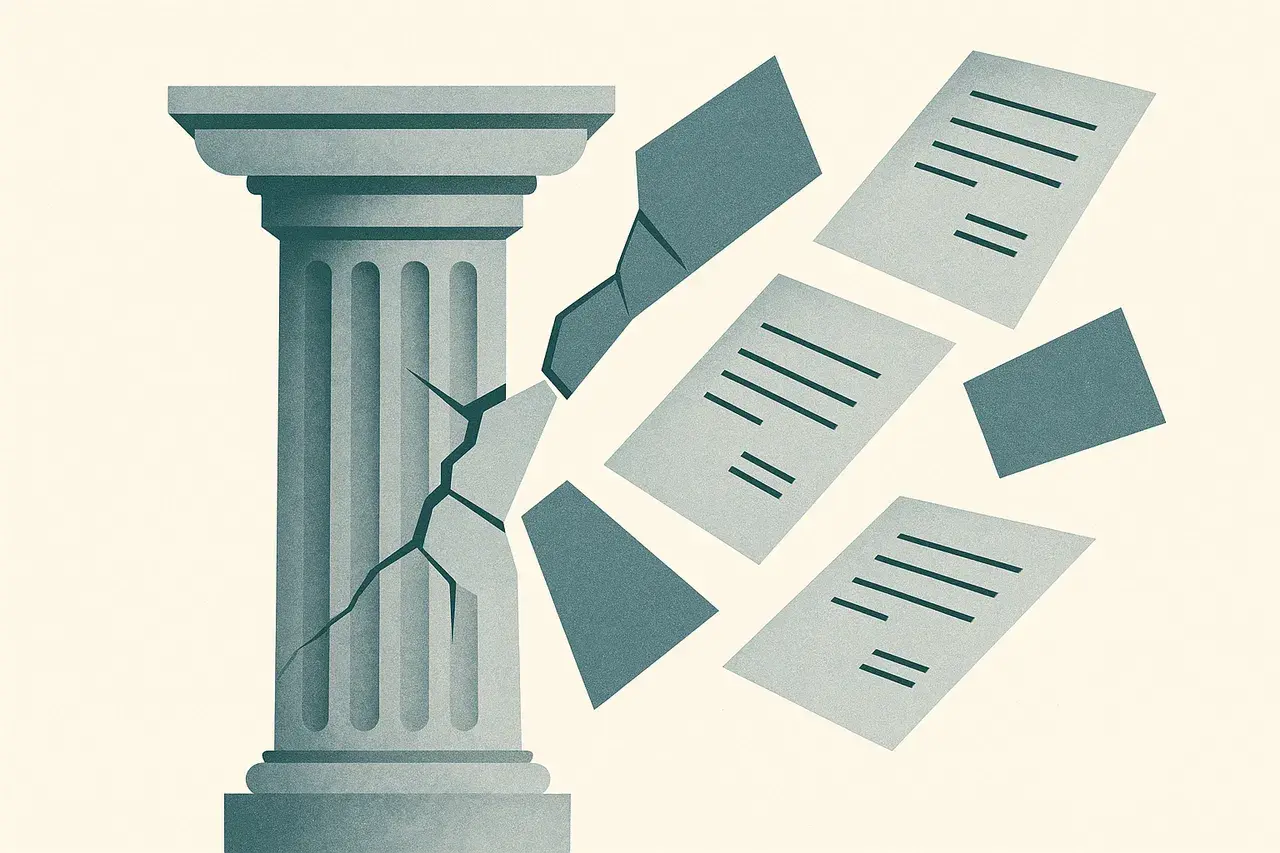
Why Supreme Court Decisions Create Immediate Contract Risk
When the United States Supreme Court issues a significant ruling, the ripple effects reach far beyond the courtroom. Commercial contracts written under prior legal assumptions can become unenforceable, ambiguous, or materially disadvantaged overnight. For in-house legal teams and procurement professionals managing large contract portfolios, the question is never simply 'what did the court decide?' The more pressing question is always: 'which of our existing agreements are now exposed?'
This is not a theoretical concern. Supreme Court decisions on arbitration, regulatory authority, employment, and federal preemption have historically invalidated clauses that legal teams considered standard. The 2025 docket is no exception, with cases touching administrative agency power and individual rights carrying direct implications for how contracts are interpreted and enforced across sectors.
Which Contract Clauses Are Most Vulnerable to Legal Shifts
Not every clause carries equal exposure when the legal landscape changes. The following clause types deserve priority attention after any major Supreme Court ruling.
Arbitration and dispute resolution clauses are perennially in the court's sights. Decisions narrowing or expanding the Federal Arbitration Act's reach can render a carefully negotiated dispute mechanism invalid or alter the rules under which it operates. Teams should audit whether their arbitration clauses specify governing procedural rules by version number, since a blanket reference to AAA or JAMS rules means any rule change flows automatically into the contract.
Governing law and jurisdiction clauses matter enormously when a ruling clarifies federal preemption. If the Supreme Court holds that federal law displaces state law in a particular area, a choice-of-law clause pointing to a specific state may produce different outcomes than the parties originally anticipated.
Force majeure and material adverse change clauses are sensitive to rulings that redefine regulatory compliance obligations. If a company's performance becomes significantly more costly due to a legal shift, does that trigger relief under the contract? The answer depends almost entirely on how broadly or narrowly the clause was drafted.
Regulatory compliance obligations embedded in supply chain, technology, and financial services contracts require particular scrutiny. A ruling that curtails or expands agency rulemaking authority changes the scope of what 'compliance with applicable law' actually requires.
How to Audit Your Contract Portfolio After a Major Ruling
A Supreme Court decision is not a one-time event for contract teams; it is a trigger for a structured review cycle. The practical steps are as follows.
First, identify the contracts most exposed by subject matter. If a ruling concerns federal employment law, prioritise service agreements, staffing contracts, and HR vendor arrangements. If it concerns administrative agency power, focus on regulated industries: financial services, healthcare, and energy.
Second, extract and compare the specific clauses at risk. This is where contract lifecycle management platforms earn their value. Manually reviewing thousands of agreements for arbitration clause language or compliance definitions is not realistic at speed. Automated clause extraction surfaces the relevant provisions across your entire portfolio in minutes rather than months.
Third, assess materiality. Not every contract with an affected clause requires immediate renegotiation. Prioritise by remaining term, contract value, and whether the counterparty is likely to invoke the changed legal position.
Fourth, document your analysis. If litigation later arises, demonstrating that the legal team conducted a prompt, systematic review after the ruling is itself evidence of good-faith contract management.
The Role of AI Contract Review in Responding to Legal Change
The traditional model of responding to legal change, circulating a memo to lawyers who then manually review key agreements, does not scale to modern portfolio sizes. A mid-size enterprise can hold tens of thousands of active contracts across multiple jurisdictions. When the Supreme Court moves, time is of the essence.
AI-powered contract review tools can be directed to search for specific clause types, flag non-standard language, and surface agreements that lack protective provisions such as change-in-law clauses or severability language. The key is that the AI reads contracts from your side of the table, assessing risk from your position rather than producing neutral summaries that leave the legal judgement entirely to the reader.
Adira's approach is to combine jurisdiction-aware legal knowledge with your organisation's own contracting standards. When a legal event occurs, the platform can be queried against your live portfolio to identify exposure, suggest redlines aligned with your house style, and prioritise outreach to counterparties. This is contract lifecycle management applied to real-world legal risk, not just workflow efficiency.
Future-Proofing Contracts Against Legal Uncertainty
The best response to Supreme Court volatility is anticipatory drafting. Several provisions, when included as standard, significantly reduce exposure to future rulings.
A change-in-law clause explicitly addresses what happens when the legal basis of the contract shifts. It can allocate the economic burden of compliance cost increases, permit either party to renegotiate, or provide termination rights without penalty.
A broad severability clause ensures that if one provision is rendered invalid by a court decision, the remainder of the contract survives. Some severability clauses go further, requiring the parties to negotiate a replacement provision in good faith.
A renegotiation trigger tied to material legal change is increasingly common in long-term commercial agreements. Rather than leaving parties to argue about whether a court ruling constitutes a force majeure event, the clause expressly creates a structured negotiation obligation.
Building these provisions into your standard templates today is far less costly than renegotiating under pressure after a ruling has already created uncertainty.
Frequently asked questions
- Does a Supreme Court ruling automatically void existing commercial contracts?
- Not automatically, but it can render specific clauses unenforceable or alter how they are interpreted. The impact depends on the subject matter of the ruling and the exact language of the contract. Legal teams should conduct a targeted clause review rather than assuming existing agreements are unaffected.
- Which contract clauses are most affected by Supreme Court decisions?
- Arbitration and dispute resolution clauses are most frequently affected, followed by governing law clauses, regulatory compliance obligations, and force majeure provisions. Any clause that references applicable law by incorporation rather than by specific text is particularly vulnerable to legal shifts.
- How should in-house legal teams respond when the Supreme Court issues a major ruling?
- The immediate priority is to identify which contracts by subject matter are most exposed, then extract and review the relevant clauses. AI contract review tools can accelerate this process across large portfolios. Teams should document their review process as evidence of good-faith compliance management.
- What is a change-in-law clause and should I include one in my contracts?
- A change-in-law clause explicitly addresses what happens when legislation, regulation, or judicial decisions materially alter the legal basis of the contract. It typically allocates compliance costs, creates renegotiation rights, or permits termination without penalty. Including one is considered best practice for any long-term or high-value commercial agreement.
- Can AI contract review tools help manage legal risk after a court ruling?
- Yes. AI contract review platforms can search an entire portfolio for specific clause types, flag missing protective provisions, and surface high-risk agreements for priority attention. The most effective tools read contracts from the client's perspective and apply jurisdiction-aware legal knowledge to assess exposure accurately.
See how Adira drafts in your voice and reads contracts from your side.
Explore the showroomWorking through a contract like this? Weave is Adira’s free tool to read, mark up, and connect any contract in your browser — no account needed.
Try Weave — free