mergers and acquisitions
What the PE Roll-Up Wave Means for Legal Contract Infrastructure
The Consolidation Trend Is Not Slowing Down
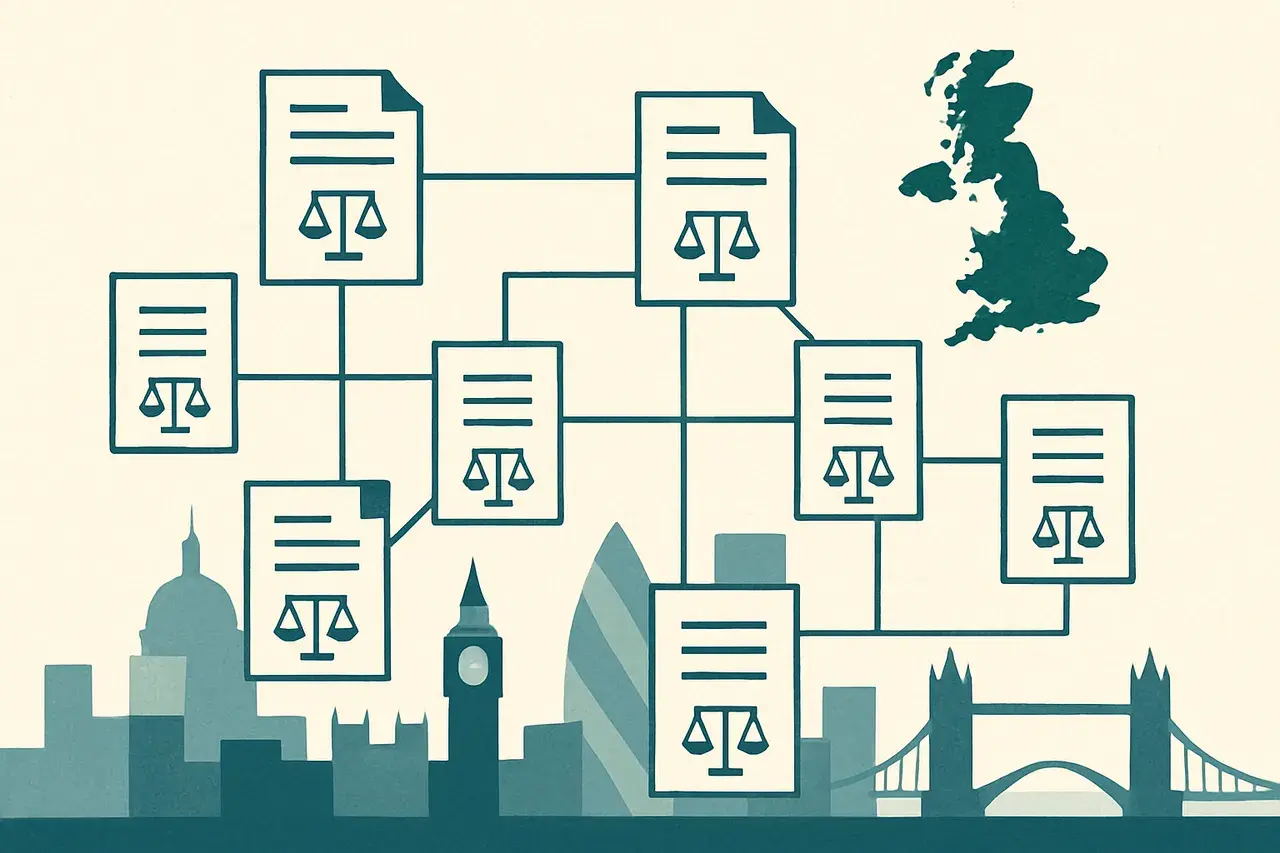
Private equity money has been circling the UK legal market for several years, but the pace of acquisition activity in 2024 and into 2025 suggests we have moved well past the exploratory phase. Firms backed by external capital are acquiring regional practices at speed, stitching together networks that span multiple cities, practice areas, and client bases. Orwins adding Newcastle-based Clarke Mairs to its group is one example among many; similar stories are appearing across the sector week after week.
For observers of legal operations, the headline numbers are interesting. The operational consequences are more interesting still.
Growth by Acquisition Creates a Contract Chaos Problem
When a PE-backed group acquires a new firm, it inherits that firm's entire contractual estate. Retainer letters, supplier agreements, premises leases, referral arrangements, PI insurance schedules, and employment contracts all arrive on day one, drafted in somebody else's voice, reviewed under somebody else's risk tolerance, and stored in somebody else's system (or, frequently, in nobody's system at all).
This is not a minor administrative inconvenience. It is a structural liability. Obligations sit in documents that the acquiring group's leadership has never read. Renewal dates pass unnoticed. Post-acquisition integration plans get delayed because no one has a clear picture of what commitments the acquired firm has already made.
Legal Futures has noted that M&A activity across the profession is hotting up, and the firms driving that activity need to think hard about what happens after the deal closes.
Standardisation Is the Central Operational Challenge
The firms that manage roll-up strategies well share one characteristic: they impose contractual standardisation quickly. That means a common set of precedent documents, a consistent approach to client terms, and a single source of truth for what every entity in the group has agreed to and with whom.
This is harder than it sounds. Each acquired firm will have its own preferred wording for limitation of liability clauses, its own approach to payment terms, and its own interpretation of what a satisfactory dispute resolution clause looks like. Some of that variation reflects genuine local practice. Much of it is simply historical accident.
A CLM platform that drafts in the acquiring group's own voice, rather than defaulting to generic templates, is not a luxury in this context. It is the mechanism by which a coherent legal identity is established across what would otherwise remain a loose federation of independent practices.
Reading Contracts From Your Side of the Table
The acquisition process itself involves extensive contract review. Due diligence on an acquired firm requires someone to read every material agreement and form a view on risk, not from the counterparty's perspective, but from the acquirer's. That distinction matters enormously.
A clause that looks unremarkable when you drafted it can carry very different implications when you are the party inheriting the obligation. Indemnity provisions, change of control triggers, and assignment restrictions all need to be assessed from the perspective of the incoming owner.
This is precisely where AI contract review that is oriented to your side of the transaction earns its cost. The question is not simply what does this clause say, but what does this clause mean for us, given our risk appetite, our jurisdiction, and our strategic intentions for this business.
What Fast-Growing Firms Should Build Now
Firms that are in acquisition mode, or that expect to be acquired, should treat their contract infrastructure as a strategic asset rather than an administrative backlog. Concretely, that means several things.
First, maintain a live repository of all material agreements, with renewal dates, counterparty details, and key obligation summaries accessible to senior management without requiring a paralegal to compile a report.
Second, establish standard form documents that reflect the firm's actual voice and risk position, reviewed against the law of the relevant jurisdiction rather than copied from an outdated precedent bank.
Third, build a process for rapidly onboarding the contractual estate of any acquisition target, so that integration timelines are not held hostage to document review backlogs.
The UK legal market is consolidating, and the firms that emerge as durable platforms will be those that invested early in the operational infrastructure to support scale. Contract management is not the most glamorous part of that investment. It is, however, one of the most consequential.
See how Adira drafts in your voice and reads contracts from your side.
Explore the showroomWorking through a contract like this? Weave is Adira’s free tool to read, mark up, and connect any contract in your browser — no account needed.
Try Weave — free