legaltech
Legal Document Bundling Meets AI: What Opus 2's Acquisition of Bundledocs Means for Contract and Litigation Tech
Why Legal Document Bundling Is Suddenly Strategic
For years, document bundling sat at the unglamorous end of legal workflow: tedious, manual, and largely ignored by the venture capital enthusiasm that swept through contract lifecycle management and AI contract review. The acquisition of Bundledocs by Opus 2, the litigation-focused platform, signals that this overlooked category is now considered infrastructure worth owning. When a well-funded litigation technology company makes its third acquisition in a short span, the market is telling you something about where durable value lies in legal operations.
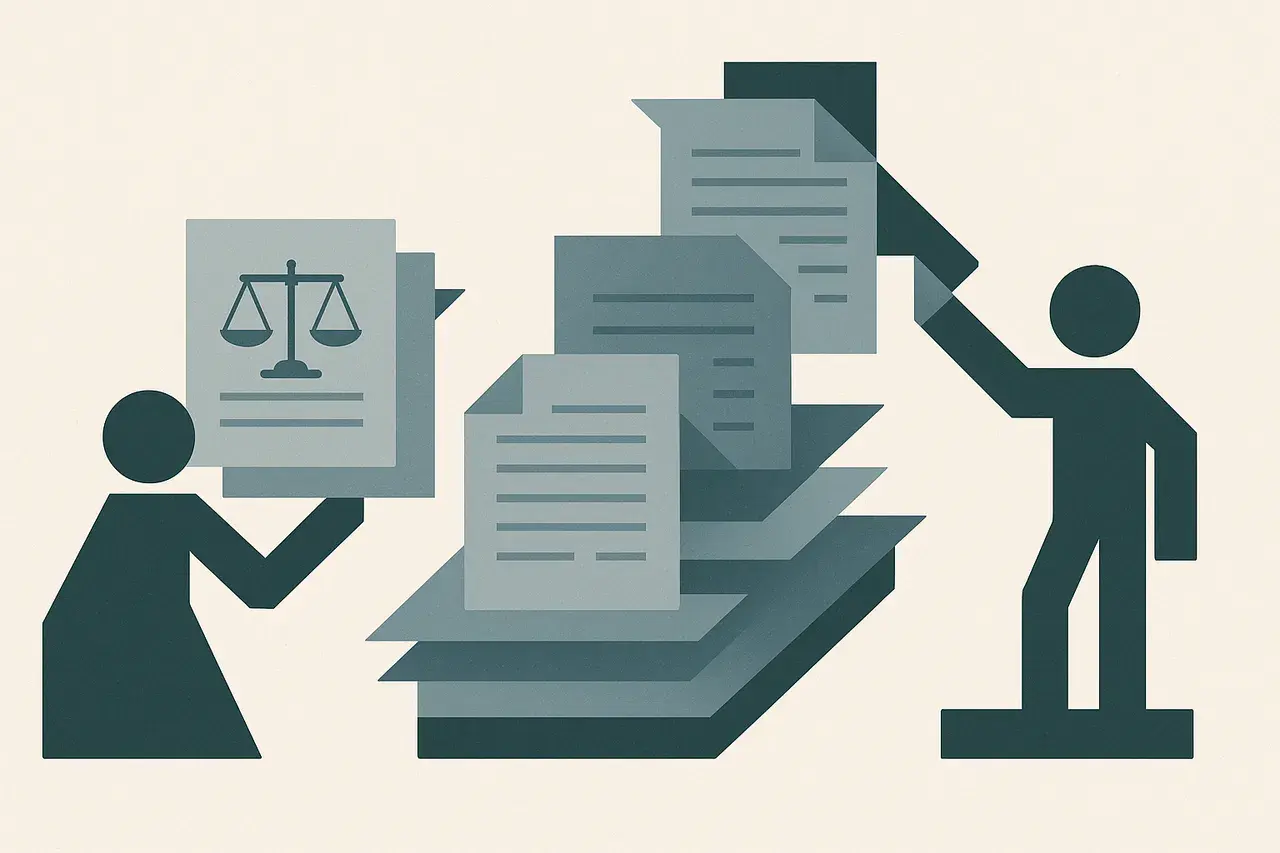
Legal document bundling software automates the assembly of court bundles, hearing packs, and disclosure sets, tasks that junior lawyers and paralegals have historically spent hours producing by hand. Bundledocs became widely used precisely because it solved a genuine pain point without requiring firms to rethink their entire stack. That kind of embedded, habitual adoption is exactly what acquirers prize.
What Opus 2 Is Building and Why It Matters
Opus 2 began as a transcription and hearings platform, earning its reputation in large-scale litigation and arbitration. By absorbing Bundledocs, it is assembling a more complete litigation workflow: from document preparation and bundling through to hearing management and transcript analysis. The strategic logic is coherent. A litigator who uses Opus 2 for a hearing and Bundledocs to prepare the bundle now has less reason to leave the ecosystem at any point in the matter lifecycle.
This kind of horizontal integration mirrors what has happened in contract lifecycle management, where platforms have progressively absorbed standalone tools for clause libraries, e-signatures, obligation tracking, and AI contract review. The difference is that litigation tech consolidation has moved more slowly, partly because court processes vary so dramatically by jurisdiction and partly because law firms have been cautious about centralising mission-critical hearing infrastructure.
According to Artificial Lawyer's reporting on the deal, Opus 2 described this as a move that deepens its document and workflow capabilities. That framing is deliberate: it positions the combined entity not merely as a bundling tool or a hearings platform, but as an end-to-end litigation support environment.
Where Document Bundling Sits Inside Contract Lifecycle Management
It is worth being precise about the boundary here, because legal teams sometimes conflate litigation support with contract lifecycle management. CLM platforms govern the commercial contract journey: drafting, negotiation, execution, obligation management, and renewal. Document bundling, by contrast, sits in the dispute resolution phase, when a contract has broken down and the matter moves toward arbitration or court.
The two categories are connected but distinct. A mature legal operations function needs both: a CLM platform that drafts in the company's own voice and reads contracts from the client's perspective, and a litigation support stack that can assemble and manage the documentary record when things go wrong. The Opus 2 and Bundledocs combination addresses the latter. CLM platforms address the former. Recognising where each tool fits prevents the common mistake of expecting one system to do everything.
That said, the integration of AI into bundling tools does create interesting adjacencies. If a litigation platform can automatically identify, extract, and organise contractual documents relevant to a dispute, it begins to overlap with the document intelligence functions that modern CLM systems already perform on live contract repositories.
The Honest Adoption Picture for Legal Teams
Legal teams evaluating litigation technology after this acquisition face a practical question: does consolidation under Opus 2 make Bundledocs more capable, or does it introduce the integration risk that often follows M&A activity in software?
The honest answer is that it depends on execution. Platform acquisitions in legaltech have a mixed record. Some firms find that acquired products improve rapidly as resources are pooled. Others find that product roadmaps slow while engineering teams are merged and commercial priorities are renegotiated. Legal operations leaders would be wise to seek clarity from Opus 2 on the near-term product roadmap for Bundledocs, data portability guarantees, and any changes to pricing structure.
For firms that are not yet Opus 2 customers, this acquisition makes evaluation more interesting. A combined litigation workflow covering bundling, hearings, and transcript management under one commercial relationship has genuine operational appeal, particularly for disputes-heavy practices or in-house teams that manage significant litigation volume.
For firms already using Bundledocs as a standalone tool, the transition risk is low in the short term. Bundledocs has an established user base and Opus 2 has a clear incentive to retain those customers rather than disrupt them.
AI's Expanding Role in Legal Document Preparation
The broader context for this deal is the rapid embedding of AI into every stage of legal document work. AI contract review has matured significantly, with models now capable of identifying non-standard clauses, flagging jurisdiction-specific risks, and summarising obligation structures at scale. The same AI capabilities are beginning to reach litigation document preparation, where they can assist with bundle organisation, chronology generation, and relevance classification.
Opus 2 has invested in AI-assisted transcription and analysis for some time. Adding Bundledocs gives it a larger surface area across which to apply those capabilities. The question for the wider market is how quickly AI will make automated bundle preparation genuinely reliable, and whether that will reduce the time lawyers spend on document preparation enough to justify the platform investment.
For legal teams thinking about AI adoption broadly, this acquisition is a useful reminder that the most durable AI tools in law are those embedded in workflow that people already use every day. Bundledocs succeeded because it was practical and habitual. The best CLM and litigation platforms will succeed for the same reason.
Frequently asked questions
- What does Bundledocs do and why did Opus 2 buy it?
- Bundledocs is a legal document bundling platform that automates the preparation of court bundles, hearing packs, and disclosure sets. Opus 2 acquired it to build a more complete litigation workflow, combining document preparation with its existing hearings and transcription capabilities.
- Is Bundledocs being discontinued after the Opus 2 acquisition?
- There is no indication that Bundledocs is being discontinued. Opus 2 has a commercial incentive to retain the existing Bundledocs user base, and the product is expected to continue operating while being integrated into the broader Opus 2 platform over time.
- What is the difference between legal document bundling software and a CLM platform?
- Legal document bundling software assembles court bundles and disclosure sets for litigation, while a contract lifecycle management platform governs the full commercial contract journey from drafting through to renewal. The two tools address different phases of legal work and are complementary rather than interchangeable.
- How is AI being used in legal document preparation?
- AI is increasingly used to classify documents for relevance, generate chronologies, assist with bundle organisation, and summarise contractual obligations. These capabilities are being embedded into both litigation support platforms and contract lifecycle management systems, reducing the manual effort involved in preparing large document sets.
- What should legal teams consider when evaluating litigation technology after an M&A deal?
- Legal teams should seek clarity on the near-term product roadmap, data portability options, and any changes to pricing or support structures. Platform acquisitions can improve products through pooled resources, but they can also slow development during integration, so early due diligence on these points is important.
See how Adira drafts in your voice and reads contracts from your side.
Explore the showroomWorking through a contract like this? Weave is Adira’s free tool to read, mark up, and connect any contract in your browser — no account needed.
Try Weave — free