contract interpretation
Living Documents vs Fixed Texts: What Contract Law Can Learn from Constitutional Interpretation
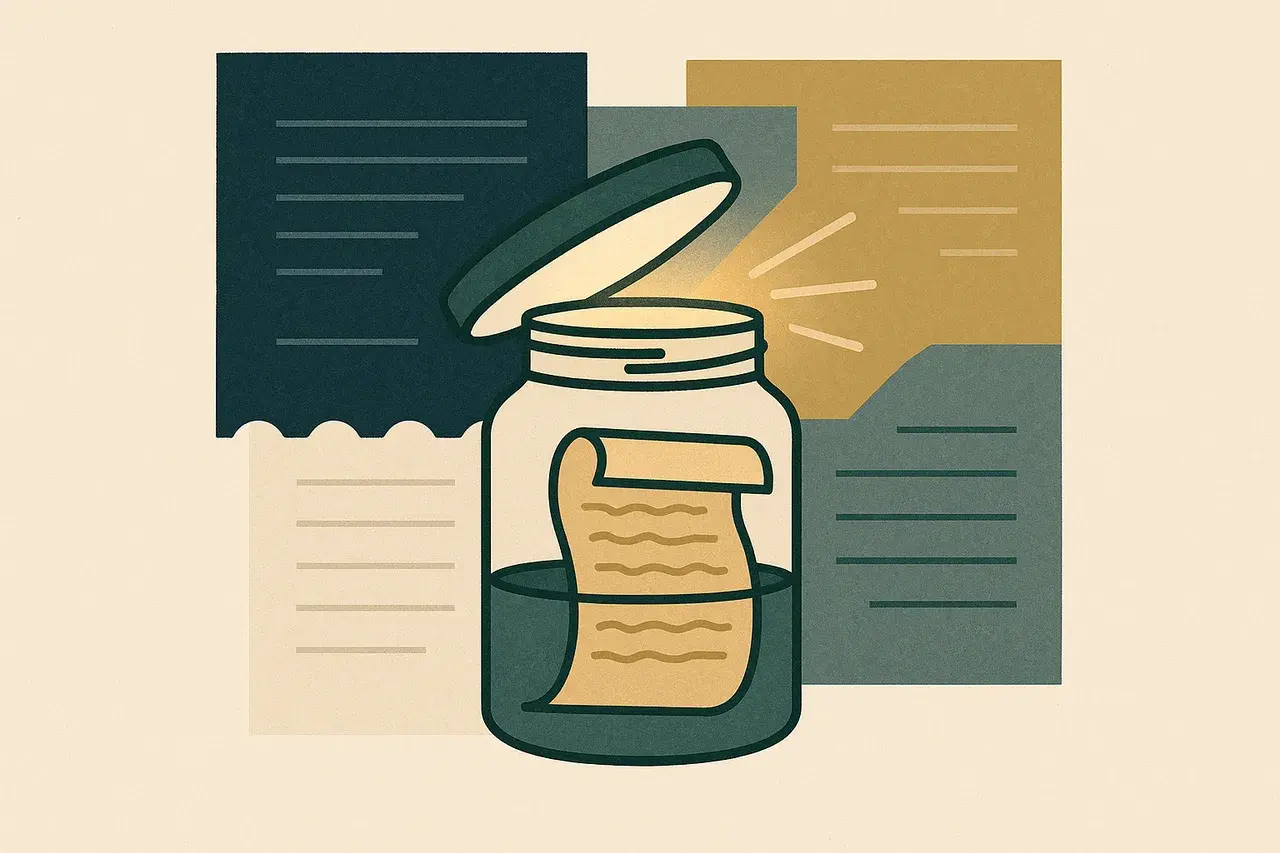
The Pickle Jar Problem: When Plain Language Is Not Enough
A recent public radio piece posed a deceptively simple question: is a pickle jar, once sealed, still the same jar after you open it, use it, and reseal it with something else entirely? The analogy was aimed at constitutional theory, but it lands squarely in the middle of one of the most persistent challenges in commercial contract law. How are contracts interpreted by courts when the words were written for a world that no longer exists? And who gets to decide what those words mean now?
These are not abstract questions. Every year, businesses lose disputes not because their contracts were silent on an issue, but because the language they chose meant something subtly different to a judge, arbitrator, or opposing counsel than it did to the drafter at the moment of signing.
Originalism and the Plain Meaning Rule in Contract Interpretation
In contract law, the closest cousin to constitutional originalism is the plain meaning rule. Under this doctrine, if the words of a contract are clear and unambiguous on their face, courts will apply them as written without looking at surrounding circumstances or what the parties may have intended. English courts, and many Commonwealth jurisdictions, have historically leaned toward this textualist approach. The goal is predictability: you wrote it, you own it.
The plain meaning rule has obvious virtues. It discourages parties from arguing after the fact that they secretly meant something different. It rewards careful drafting. It keeps litigation costs down by narrowing what evidence is admissible. But it has a significant flaw. Language is not a sealed jar. Words accumulate new meanings, industries develop new conventions, and the commercial context surrounding a contract shifts in ways no drafter can fully anticipate at signing.
The Living Document Argument: How Courts Fill Gaps in Contracts
On the other side of the debate sits a more contextual, purposive approach to contractual interpretation, one that asks what a reasonable person with full knowledge of the background circumstances would have understood the contract to mean. Lord Hoffmann's judgment in the 1997 case ICS v West Bromwich Building Society articulated this contextual method so clearly that it reshaped English contract law for a generation. The short version: context is everything, even when the words look plain.
This approach accepts that contracts are, in a limited sense, living documents. Not living in the sense that parties can rewrite them unilaterally, but living in the sense that their meaning is always read against a background that includes commercial common sense, industry practice, and the evident purpose of the agreement. Courts in the United States, Australia, Singapore, and across the EU apply similar contextual principles, though with different weights assigned to extrinsic evidence.
For businesses operating across multiple jurisdictions, understanding which interpretive philosophy applies to each contract is not a nice-to-have. It is a core risk management question.
Why Ambiguous Contract Language Is So Expensive
When contract language is ambiguous, litigation becomes almost inevitable. The parties will each have a plausible reading, and the only resolution is a court or arbitral tribunal. The costs are obvious: legal fees, management time, damaged relationships, and uncertain outcomes. What is less obvious is how often the ambiguity was preventable.
Common sources of expensive ambiguity include defined terms that are used inconsistently, boilerplate clauses copied from templates drafted under a different governing law, and provisions that address a situation precisely as it existed at signing but fail to anticipate variation. A force majeure clause written before 2020 may say nothing useful about a global pandemic. A confidentiality clause drafted before generative AI became widespread may say nothing coherent about what a counterparty's AI tools are permitted to do with your data.
The gap between the world at signing and the world at dispute is exactly where contracts break down.
How AI Contract Review Changes the Interpretation Equation
This is where AI contract lifecycle management becomes genuinely relevant to the interpretation debate, rather than just a productivity story. A platform that reads contracts from your side of the table, in the context of your jurisdiction's interpretive rules, can flag language that looks clear but carries known interpretive risk. It can identify clauses that courts in your governing law jurisdiction have historically read against the drafter. It can surface gaps that would require a court to fill in meaning you would rather have specified yourself.
Adira is built on exactly this logic. Drafting in a company's own voice matters, but drafting with awareness of how that voice will be heard by a court in London, New York, Singapore, or Frankfurt matters more. The goal is not a contract that reads well at signing. The goal is a contract whose meaning survives contact with a dispute.
Drafting Contracts That Stand the Test of Time
The constitutional debate between fixed original meaning and adaptive living interpretation has no clean resolution, and neither does its contractual equivalent. But commercial parties have an advantage that constitutional drafters do not: they can revise. Amendment clauses, periodic review obligations, and clearly scoped definitions are the tools that allow a contract to acknowledge its own limits.
Best practice in contract drafting best practices today means building in explicit mechanisms for change: change-of-law provisions, technology-neutral definitions, and clear escalation procedures when circumstances fall outside what the original text anticipated. A contract that admits it cannot foresee everything, and provides a principled process for handling the unforeseen, is more durable than one that tries to seal the jar permanently and hopes nothing inside changes.
The pickle jar, it turns out, is a better metaphor for contract risk than it might first appear. The question is not whether to seal it, but how to design a lid that can be safely reopened when the contents need attention.
Frequently asked questions
- How do courts interpret ambiguous contract language?
- Courts typically apply either a plain meaning rule, which looks only at the words as written, or a contextual approach, which considers background circumstances and commercial common sense. Which method applies depends on the governing law of the contract. English and many Commonwealth courts now favour a contextual reading following established case law, while some US states still apply strict textualism.
- Can the meaning of a contract change after it is signed?
- The formal terms of a contract do not change after signing unless the parties agree to an amendment. However, courts interpret those fixed terms against a changing commercial context, which means the practical meaning applied in a dispute may differ from what the drafter originally intended. This is why precise, future-aware drafting matters so much.
- What is the plain meaning rule in contract law?
- The plain meaning rule holds that if contract language is clear and unambiguous on its face, courts will apply it as written without looking at extrinsic evidence such as pre-contract negotiations or industry custom. It prioritises certainty and rewards careful drafting, but it can produce harsh results when literal words do not reflect the parties' evident commercial purpose.
- How can AI help with contract interpretation risks?
- AI contract review tools can identify language that carries known interpretive risk under a specific governing law, flag inconsistent use of defined terms, and surface gaps that courts would need to fill in a dispute. Platforms like Adira read contracts from the client's perspective and flag clauses that could be read against the drafter, helping teams resolve ambiguity before it becomes litigation.
- What are best practices for drafting contracts that last?
- Durable contracts use technology-neutral and context-neutral definitions, include explicit change-of-law and amendment provisions, and anticipate how circumstances might shift over the contract's life. Periodic review obligations and clear escalation procedures for unforeseen situations reduce the risk that a court will need to fill gaps in ways the parties did not intend.
See how Adira drafts in your voice and reads contracts from your side.
Explore the showroomWorking through a contract like this? Weave is Adira’s free tool to read, mark up, and connect any contract in your browser — no account needed.
Try Weave — free