legal aid
Legal Aid at Breaking Point: What the Collapse of Access to Justice Means for the Wider Legal Market
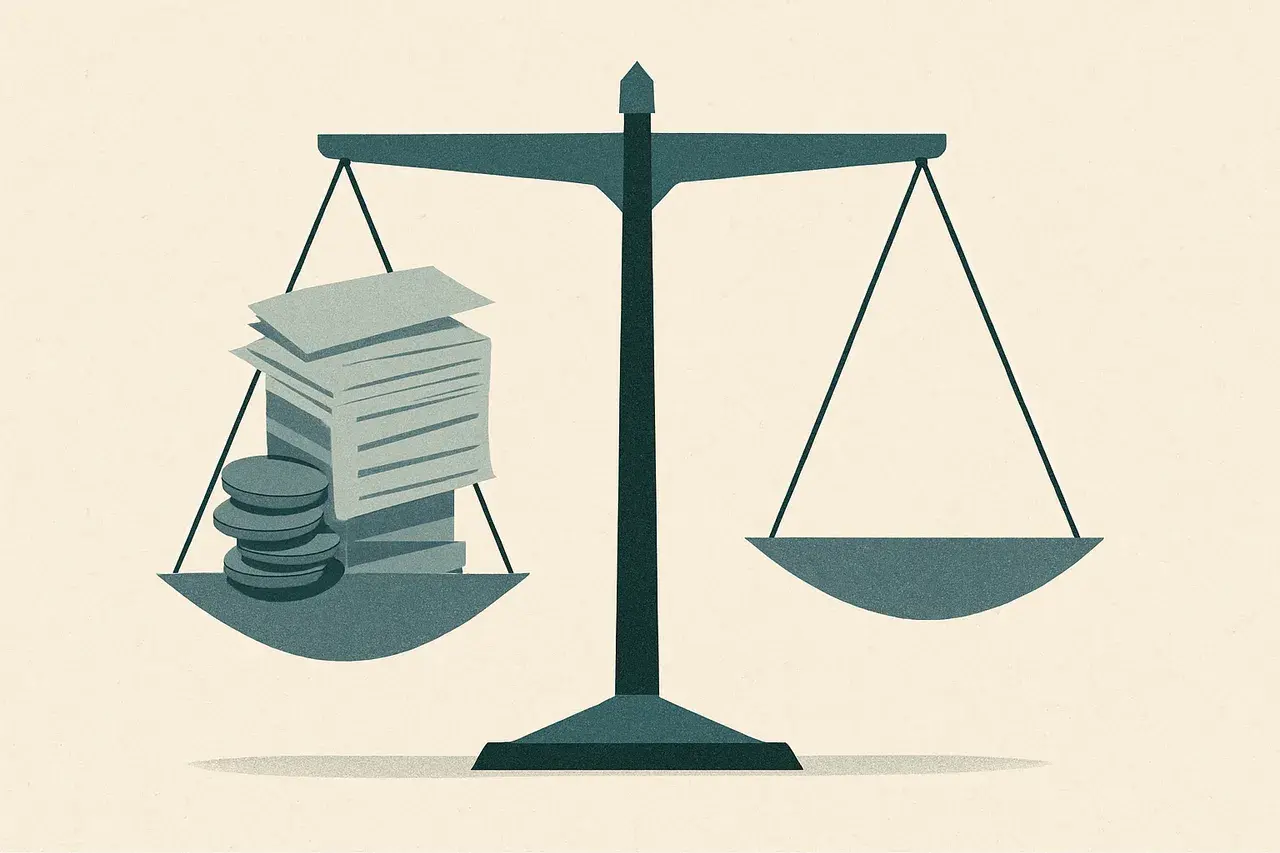
A System Failing on Both Sides of the Desk
The Justice Committee's latest findings make uncomfortable reading. MPs have concluded that legal aid is a system "people cannot qualify for or access, and that providers cannot sustainably deliver." That double failure, one affecting citizens and the other affecting practitioners, is not a coincidence. It is the predictable outcome of decades of fee freezes, means-test thresholds left to erode against inflation, and administrative complexity that makes the work economically irrational for solicitors to take on.
The immediate human cost is clear: people facing housing eviction, immigration decisions, or family breakdown simply cannot find representation. But the structural cost to the profession deserves equal attention. When an entire category of legal work becomes financially unviable, firms do not quietly absorb the loss. They exit the market, concentrate on commercial work, or collapse entirely. The Law Society has warned for years that legal aid deserts are spreading across England and Wales. The MPs' report confirms that warning has become a diagnosis.
The Hidden Pressure on Commercial and In-House Teams
It might seem that a crisis in publicly funded law is remote from the concerns of a corporate legal team or a mid-size commercial firm. That assumption is increasingly difficult to sustain.
First, the talent pipeline matters. Many solicitors who now work in commercial settings began their careers in legal aid, gaining early advocacy experience and client-handling skills that a purely transactional training rarely provides. If legal aid firms continue to exit the market, that developmental pathway narrows for the whole profession.
Second, the regulatory and reputational environment shifts when access to justice deteriorates publicly. Governments under pressure to be seen to act tend to impose obligations across the profession rather than simply increase legal aid rates. Pro bono requirements, mandatory reporting, or wider duties of care are all tools that parliaments reach for when the voluntary system demonstrably fails. Commercial firms and in-house teams should monitor the policy response closely.
Third, and perhaps most directly, corporate counterparties, employees, and supply-chain partners all exist in a society where unresolved legal disputes accumulate. Debt enforcement, employment tribunal backlogs, and disputed contracts do not disappear because one side lacks representation. They become more unpredictable and more expensive to resolve when they eventually arrive in front of a commercial team.
Where Technology Fits, and Where It Does Not
There is a temptation, particularly from those selling legal technology, to position AI as the solution to the access-to-justice gap. The argument runs that if legal tasks become cheaper and faster, more people can be served at lower cost. There is a kernel of truth in this, but it requires careful qualification.
Automation can reduce the unit cost of document-heavy work: producing a tenancy agreement, drafting a standard letter before action, or generating a first-pass contract review. Tools like Adira, designed to draft in a firm's own voice and read contracts from the client's perspective while understanding the governing law, can compress the time a solicitor spends on routine tasks. In a legal aid context, that compression could theoretically allow a fee earner to handle more matters within the same fixed fee.
But the bottleneck in legal aid is not primarily one of drafting speed. It is one of rates so low that even a substantially faster process does not produce a viable margin. Technology reduces the numerator. It cannot fix a denominator set by government policy. Any honest account of what legal AI can contribute to access to justice must acknowledge that boundary.
What Responsible Firms Should Do Now
For firms still operating in legally aided areas, the practical priority is efficiency at every stage: intake, conflict checking, matter management, and document production. Any reduction in non-chargeable administrative time directly improves the economics of a fixed-fee matter. AI tooling that handles first-draft work quickly and accurately is therefore directly relevant, not as a silver bullet, but as a margin-management tool.
For commercial firms, the moment calls for engagement rather than detachment. Responding to the Law Society's consultations, supporting pro bono coordinators with genuine resource rather than headline numbers, and contributing to the policy debate on fee reform all matter. The legal profession's credibility as a self-regulating body depends in part on its willingness to make the case for public legal funding even where the commercial incentive to do so is absent.
The Structural Question Parliament Must Answer
No amount of process improvement, voluntary effort, or technological deployment resolves the core problem the MPs have identified. Rates that have not kept pace with inflation for fifteen years cannot be fixed by efficiency alone. The report is an opportunity for the government to set a credible timetable for fee reform backed by actual funding commitments.
Until that happens, the legal aid system will continue to contract. And a legal system in which access depends on the ability to pay is not a public good. It is a private one.
See how Adira drafts in your voice and reads contracts from your side.
Explore the showroom