climate litigation
Climate Change Litigation and Contracts: What the Supreme Court Case Means for Oil and Gas Agreements
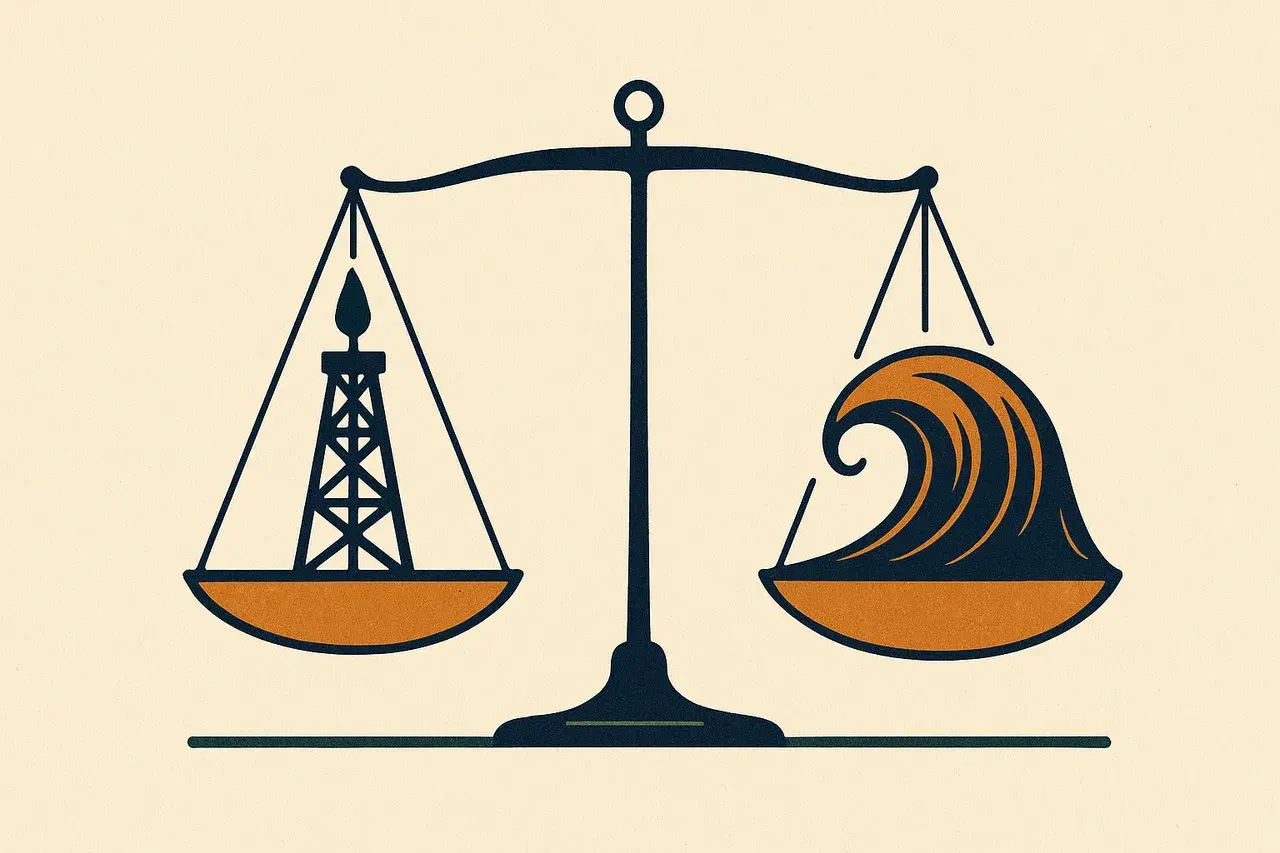
Why the Supreme Court Climate Case Is a Contract Story, Not Just a Policy One
When the United States Supreme Court agreed to hear arguments over whether state and municipal governments can pursue climate change litigation against major oil and gas producers in state courts, most commentary focused on the politics. The case, which pits local authorities against some of the world's largest energy companies, has been framed in the press as a culture-war spectacle. But the more consequential question, for businesses operating anywhere in the global economy, is a contractual one: who bears the cost of climate-related harm, and how are those obligations written, allocated, and enforced across complex commercial agreements?
The answer to that question will be shaped by how far courts allow climate liability to travel, and that outcome has direct implications for how energy contracts, supply agreements, and ESG compliance frameworks are drafted today.
What the Litigation Actually Turns On
The core legal dispute is jurisdictional. Oil-producing states and the federal government have argued that climate change litigation of this kind belongs in federal court, where existing statutory frameworks and precedents are more predictable and, historically, more favourable to defendants. Municipal and state plaintiffs, by contrast, prefer state courts, where common-law nuisance claims and consumer-protection statutes can be deployed more flexibly against corporate conduct.
The Supreme Court's ruling will determine which courtroom these battles are fought in. That matters enormously for risk modelling. If state courts become viable venues for climate liability claims, the pool of potential defendants expands, the theories of harm multiply, and the limitation periods become less predictable. For any company that produces, refines, transports, or sells fossil-fuel-derived energy, the exposure is no longer theoretical.
The Indemnity and Liability Gap in Existing Oil and Gas Contracts
Most long-form oil and gas contracts, including production-sharing agreements, offtake agreements, and pipeline access contracts, were drafted in an era when climate liability was regarded as a regulatory risk rather than a litigation risk. That distinction matters because the two risk types attract different contractual treatments.
Regulatory risk is typically addressed through compliance clauses and change-of-law provisions. Litigation risk, particularly open-ended tort liability of the kind being advanced in state climate lawsuits, requires indemnification language that is far more precisely scoped. Many existing agreements contain indemnity provisions that are silent on climate-related damages, or that exclude losses arising from "governmental action" without specifying whether court-ordered remedies qualify.
If the Supreme Court opens the door to state-court climate litigation, counterparties to those older agreements will face a gap: the contracts say nothing useful about who absorbs a climate-damages judgment. Renegotiation becomes likely, expensive, and contentious.
Force Majeure, ESG Riders, and the New Drafting Landscape
Two contractual tools have been gaining traction in energy agreements over the past three years, and the Supreme Court case accelerates their relevance considerably.
The first is the climate-aware force majeure clause. Traditional force majeure provisions excuse performance when events are unforeseeable and beyond a party's control. Courts in several jurisdictions have begun to question whether climate-related disruptions, such as regulatory shutdowns triggered by emissions findings or infrastructure damage from extreme weather, qualify under standard language. Careful drafters are now specifying which climate scenarios do and do not engage the clause, rather than leaving interpretation to a judge.
The second is the ESG compliance rider. Some sophisticated buyers, particularly those subject to the EU's Corporate Sustainability Reporting Directive or comparable frameworks, are attaching ESG schedules to supply contracts that require sellers to warrant their emissions data and maintain minimum climate-governance standards. A successful state-level climate lawsuit in the United States would almost certainly accelerate the adoption of such riders, as buyers seek to limit their own exposure to secondary liability.
How Contract Drafting Should Respond Right Now
Waiting for the Supreme Court's judgment before updating contract templates is a reasonable instinct but a risky strategy. The case may not be decided until mid-2025, and in the interim, transactions are closing with legacy language that was never designed to handle climate litigation risk.
Practical steps for legal and procurement teams include: auditing indemnity clauses in existing energy agreements to identify silent zones around environmental liability; reviewing force majeure definitions to ensure they address regulatory and judicial climate interventions explicitly; and considering whether counterparty ESG representations should be included in new agreements as a matter of routine rather than exception.
For multinational businesses, jurisdiction selection also deserves fresh attention. The distinction between federal and state court, which the Supreme Court is currently refining, has an analogue in many other legal systems, including the division between national courts and regional tribunals in the European Union. A coherent global contracting strategy cannot treat climate liability as a US-only problem.
What an AI Contract Platform Can Do That Manual Review Cannot
The sheer volume of legacy agreements that may contain inadequate climate-liability language is the practical obstacle that most legal teams face. Reading thousands of contracts manually to identify indemnity gaps or force majeure ambiguities is neither fast nor consistent.
This is precisely the context in which AI-assisted contract review earns its value. A platform that reads contracts from the client's perspective, understands the governing law of the relevant jurisdiction, and flags provisions that are silent on climate-related liability can compress weeks of audit work into hours. More importantly, it can apply consistent standards across an entire portfolio, rather than depending on the particular expertise or attention of the individual reviewer.
As climate change litigation moves from an emerging risk to a mainstream one, the contractual infrastructure that governs energy relationships will need to catch up quickly. The Supreme Court case is the catalyst. The response belongs in the contract.
Frequently asked questions
- Can states sue oil companies for climate change damages?
- Several US states and cities have filed climate change lawsuits against major oil producers, seeking damages under state common-law and consumer-protection theories. The Supreme Court is currently deciding whether those cases belong in state or federal court, which will determine how viable such claims are going forward.
- What does the Supreme Court climate case mean for oil and gas contracts?
- If state courts are permitted to hear climate liability claims, indemnity and force majeure clauses in existing energy contracts may prove inadequate because they were drafted before this litigation risk was considered material. Companies should audit their agreements now for gaps in climate-related liability language.
- Does force majeure cover climate change events in energy contracts?
- Standard force majeure clauses rarely address climate-specific scenarios explicitly, and courts are divided on whether regulatory shutdowns or extreme-weather events triggered by climate change qualify. Modern drafting practice increasingly specifies which climate-related events engage or exclude the clause to reduce ambiguity.
- What is an ESG indemnity clause in an energy contract?
- An ESG indemnity clause allocates liability between contracting parties for losses arising from failures to meet environmental, social, and governance standards, including emissions breaches or climate-compliance shortfalls. These provisions are becoming more common as buyers face their own regulatory reporting obligations and seek to limit secondary exposure.
- How should companies update contracts in response to climate litigation risk?
- Legal and procurement teams should audit existing indemnification provisions for silence on environmental liability, revisit force majeure definitions to cover regulatory and judicial climate interventions, and consider adding ESG compliance representations to new agreements. AI-assisted contract review can help scale this audit across large portfolios efficiently.
See how Adira drafts in your voice and reads contracts from your side.
Explore the showroomWorking through a contract like this? Weave is Adira’s free tool to read, mark up, and connect any contract in your browser — no account needed.
Try Weave — free