climate liability
Climate Liability Lawsuits and SCOTUS: What the Boulder Case Means for Corporate Contracts
Why the Boulder Climate Case at SCOTUS Matters Beyond the Headlines
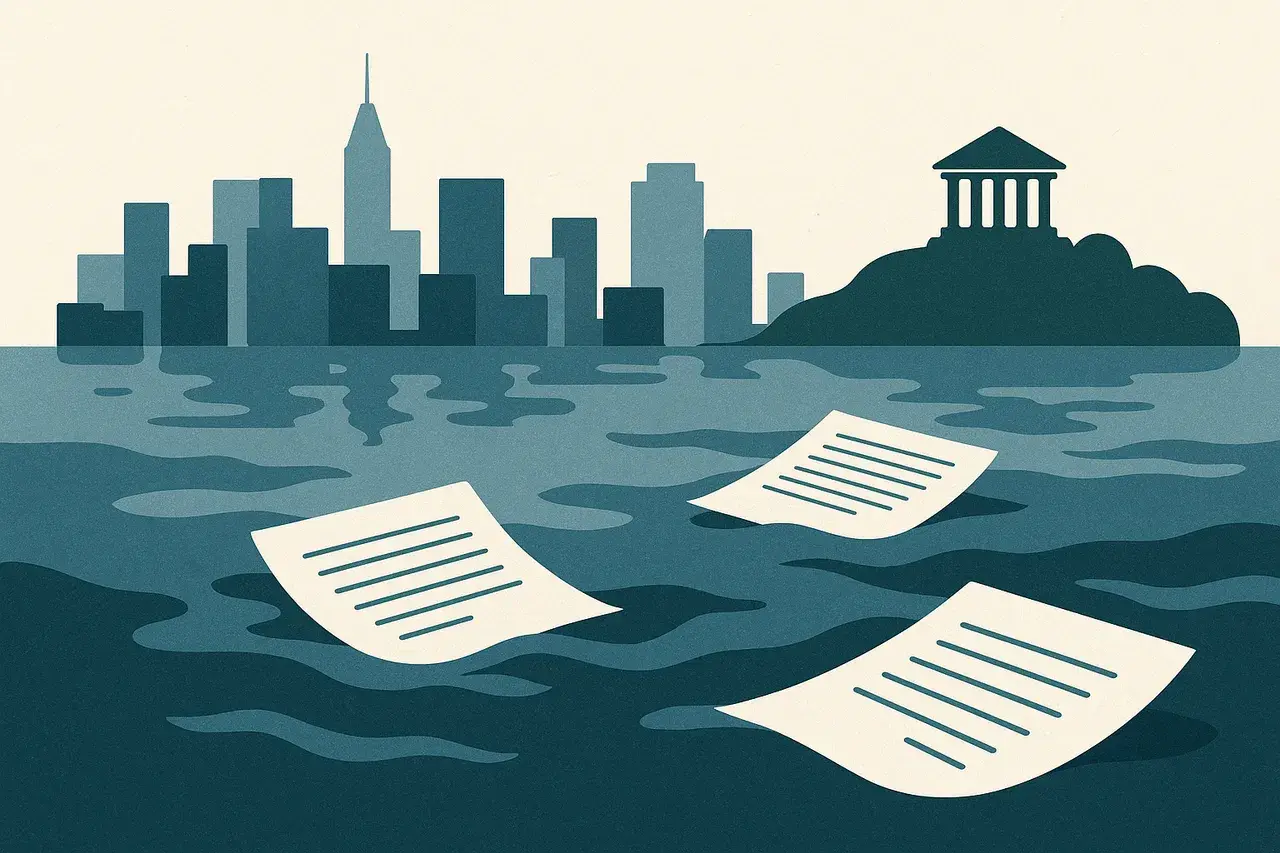
The Boulder climate liability lawsuit, now heading to the United States Supreme Court, is attracting attention well beyond environmental law circles. At its core, the case asks whether municipalities can sue fossil fuel companies under state tort law for the local costs of climate change, or whether federal law pre-empts those claims entirely. The answer will not simply resolve a dispute between a Colorado city and a group of energy producers. It will set the terms under which climate-related financial responsibility can be allocated through the legal system, and that allocation question sits at the heart of commercial contract drafting for the next decade.
For legal and procurement teams reviewing supply agreements, infrastructure contracts, and long-term energy arrangements, the jurisdictional question before SCOTUS is as commercially important as the environmental one.
The Core Legal Question: Federal Pre-emption or State Tort Rights
The Supreme Court will examine whether climate liability claims brought by local governments belong in state court, where tort remedies are broader and juries more sympathetic, or in federal court, where the Clean Air Act's regulatory framework arguably displaces them. Fossil fuel defendants have consistently sought removal to federal court, arguing that claims touching on nationwide greenhouse gas emissions are inherently a matter of federal common law.
If SCOTUS agrees with that position, it would effectively immunise large emitters from a wave of state-level climate suits. If the court sides with Boulder and similar municipalities, state courts across the country become viable venues for climate damage claims, and the potential liability exposure for energy companies, their insurers, and their contractual counterparties increases substantially.
The jurisdictional outcome shapes not only who can sue whom, but on what terms settlements are reached and how indemnity provisions in commercial contracts are interpreted.
How Climate Litigation Risk Flows into Commercial Contracts
Corporate counsel have, until recently, treated climate litigation as a reputational and regulatory concern rather than a direct contractual one. That distinction is dissolving. Supply chain agreements, energy offtake contracts, project finance documents, and real estate leases increasingly need to account for the possibility that a counterparty faces material liability from climate damage claims.
Several contract mechanisms are directly implicated. Force majeure clauses, traditionally drafted around sudden physical events, are being tested against slow-onset climate impacts such as prolonged drought, coastal flooding, and wildfire disruption. Indemnity and hold-harmless provisions in contracts with energy producers may be construed differently if a court finds that the producer bore foreseeable responsibility for contributing to those very conditions. Representations and warranties around environmental compliance become harder to give and harder to rely on when the regulatory and litigation landscape is in flux.
The Boulder case, depending on its outcome, could either accelerate or temporarily dampen the pressure on companies to include explicit climate liability carve-outs in their agreements.
What a SCOTUS Ruling Could Mean for Contract Drafting
A ruling in favour of the municipalities would signal to corporate legal teams that climate liability is a live, quantifiable risk that cannot be deferred to the regulatory sphere. Contracts would need to address it directly. Practically, that means several things.
First, indemnity schedules in energy and infrastructure contracts may need to specify how climate damage claims are allocated between parties, particularly where one party is closer to the point of emission. Second, representations about regulatory compliance may need to extend to disclosure of pending or threatened climate litigation. Third, Material Adverse Change definitions, which trigger rights to terminate or renegotiate, would benefit from language that captures the emergence of significant climate liability as a qualifying event.
A ruling favouring federal pre-emption would not eliminate the need for this work. It would simply delay it, as federal legislative or regulatory action on climate liability remains a live possibility and international jurisdictions are moving independently.
ESG Obligations and the Contractual Chain
For companies with published ESG commitments or those operating under contracts that require ESG compliance from counterparties, the Boulder outcome creates an additional layer of analysis. If climate liability can be established through state tort law, a supplier facing municipal climate suits may be in technical breach of an ESG representation it has given to a buyer downstream.
This is not a theoretical concern. Several large procurement frameworks already require suppliers to disclose material litigation. A significant adverse climate judgment, or even a substantial settlement, could constitute a material change that triggers disclosure or termination rights under those frameworks.
The Adira platform reads contracts from a company's own perspective, which means it can identify where a counterparty's climate litigation exposure might create risk for the client rather than simply cataloguing what the document says on its face. That is precisely the kind of contextual reading that this evolving landscape demands.
Preparing Now: Contract Audit and Proactive Drafting
Legal teams do not need to wait for a SCOTUS ruling to act. A targeted audit of high-value contracts with energy sector counterparties, infrastructure operators, and commodity suppliers will reveal where climate liability risk is unaddressed, ambiguously allocated, or actively assumed without commercial intention.
Key questions to ask during that review include: Does the indemnity clause address liability arising from regulatory or judicial findings of climate damage? Is force majeure drafted to include gradual climate-driven disruption, or only sudden events? Does the material adverse change definition capture the emergence of climate litigation as a trigger? Are ESG warranties bilateral, and do they contemplate climate litigation risk specifically?
The Boulder case at the Supreme Court is a signal, not a verdict. It tells contracting parties that climate liability is moving from the policy domain into the commercial one, and that the contracts signed today will be interpreted in the light of whatever legal framework emerges. Getting ahead of that shift is straightforward when you know what to look for.
Frequently asked questions
- What is the Boulder climate case going to SCOTUS about?
- The case concerns whether the City of Boulder and surrounding counties can sue fossil fuel companies under state tort law for the local costs of climate change, or whether federal law pre-empts those claims. The Supreme Court will decide which court system is the proper venue, a ruling that has major consequences for the scope of corporate climate liability across the United States.
- Can cities sue oil companies for climate damage?
- Several municipalities have brought state tort claims against fossil fuel producers, arguing those companies knew their products would cause climate harm and concealed that knowledge. Whether those suits can proceed in state court or must be heard in federal court, where they are more easily dismissed, is the central question SCOTUS will resolve in the Boulder case.
- How does climate litigation affect commercial contracts?
- If courts allow broad climate liability claims to proceed, companies face the prospect that their suppliers or counterparties carry material undisclosed liabilities, that force majeure and indemnity clauses will be tested against climate-related events, and that ESG representations in contracts could be breached by involvement in climate litigation. Legal teams should audit existing contracts and update standard drafting to address these risks explicitly.
- What contract clauses are most relevant to climate liability risk?
- The most relevant clauses are force majeure definitions, indemnity and hold-harmless provisions, material adverse change triggers, and ESG or regulatory compliance representations. Each may need to be updated to reflect the possibility that climate damage claims, not just regulatory enforcement, create actionable risk between contracting parties.
- What happens if SCOTUS rules against fossil fuel companies in the Boulder case?
- A ruling in favour of the municipalities would open state courts across the United States to climate damage claims, substantially increasing potential liability for energy companies and their supply chains. It would also create immediate pressure on corporate legal teams to revise standard contract language, particularly around indemnity, ESG warranties, and material adverse change definitions.
See how Adira drafts in your voice and reads contracts from your side.
Explore the showroomWorking through a contract like this? Weave is Adira’s free tool to read, mark up, and connect any contract in your browser — no account needed.
Try Weave — free