immigration law
Birthright Citizenship Legal Battle: What the Contractual and Compliance Fallout Means for US Employers
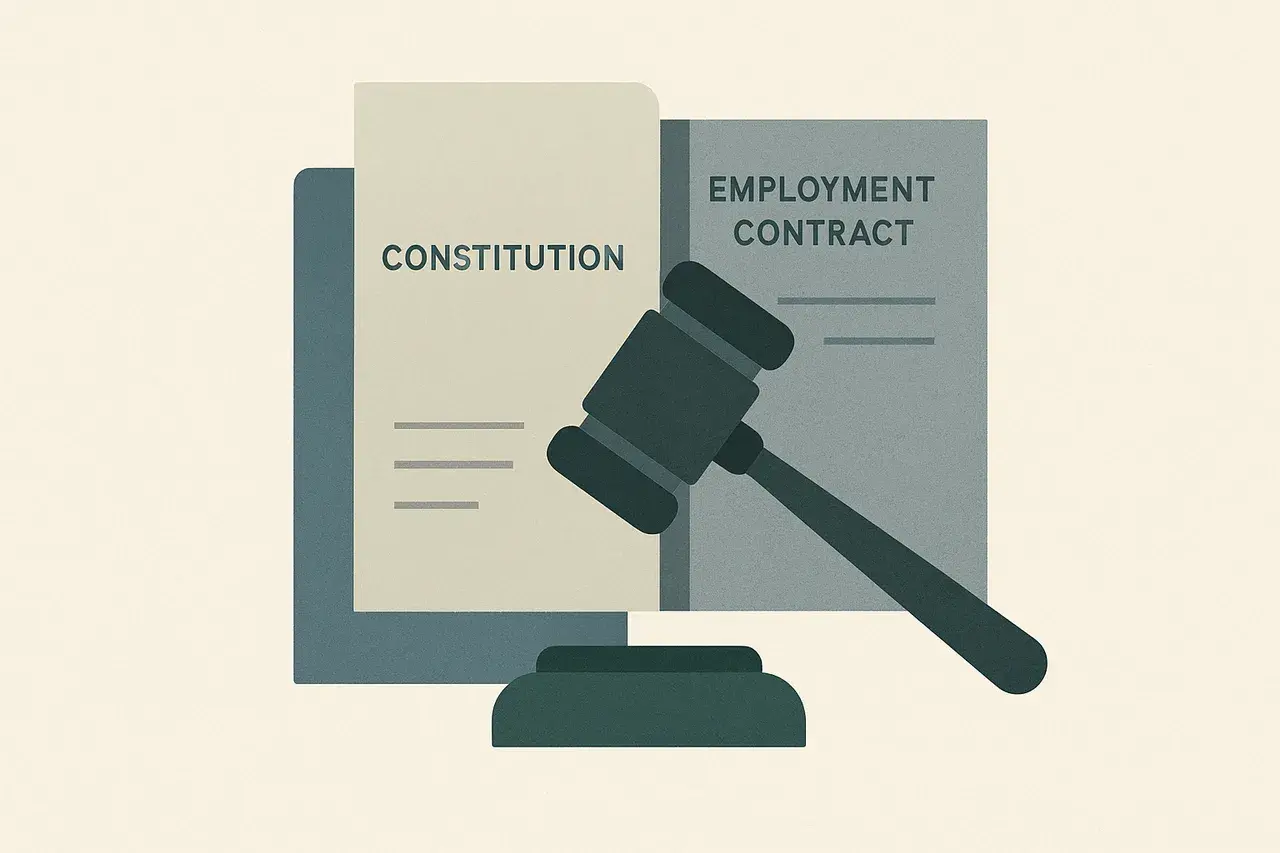
Why the Birthright Citizenship Legal Battle Matters Beyond the Courtroom
The ongoing legal battle over birthright citizenship is not simply a constitutional dispute between civil liberties groups and the executive branch. For in-house counsel, HR directors and supply-chain managers, the uncertainty created by repeated executive attempts to narrow the scope of the Fourteenth Amendment's Citizenship Clause generates concrete compliance obligations and contractual risks that demand immediate attention. Courts have so far blocked the policy, but the litigation is active, and the regulatory environment surrounding employment eligibility verification, I-9 processes and workforce status confirmation remains volatile.
The Fourteenth Amendment states, in plain terms, that all persons born on US soil and subject to its jurisdiction are citizens. That guarantee has been settled constitutional law for over a century. Yet the executive order challenged in recent litigation attempted to instruct federal agencies to treat certain US-born individuals as non-citizens, which would have cascading effects on how employers verify work authorisation and how contracts define eligible personnel.
The Regulatory Risk Inside Your Employment Contracts
Employment contracts and workforce agreements frequently contain representations about work authorisation and legal eligibility to work in the United States. If the executive branch were to succeed in reclassifying some birthright citizens as non-citizens, employers who rely on those representations without updated verification protocols could face liability under the Immigration Reform and Control Act, which governs I-9 compliance and imposes civil and criminal penalties for knowing employment of unauthorised workers.
More immediately, in-house teams should audit their I-9 procedures and any contractual language that ties eligibility to citizenship status rather than simply lawful work authorisation. Contracts that define "eligible worker" by reference to citizenship categories, rather than to the statutory standard of authorisation to work, create a gap that executive policy changes could exploit. Updating definitions now, before any further judicial or regulatory movement, is the lower-risk path.
Supply-Chain and Service Agreements: The Downstream Compliance Exposure
The birthright citizenship executive order compliance risk is not confined to direct employment relationships. Many service agreements, staffing contracts and outsourcing arrangements include representations and warranties from vendors about the legal status of personnel assigned to perform work. If a staffing agency or managed service provider later discovers that individuals it placed were, under a revised government interpretation, not recognised as citizens, both the provider and the client company could face legal exposure.
Contracts with US-based suppliers and staffing firms should be reviewed for indemnification provisions covering immigration status misrepresentation. Where such provisions are absent or narrowly drawn, renegotiation is warranted. Buyers should also consider audit rights clauses that allow them to request evidence of work-authorisation verification, independent of any disputed citizenship classification.
What Federal Contractors Face Under Heightened Scrutiny
Federal contractors operate under a separate layer of obligation. Executive Order 11246 compliance and the requirements of the Federal Acquisition Regulation already impose strict non-discrimination and eligibility verification duties. Any executive action that purports to alter the citizenship status of a class of workers effectively creates a conflict between the contractor's existing FAR obligations and any new agency guidance that may emerge from the executive order's enforcement.
In-house teams supporting federal contractors should flag this tension explicitly in their legal risk registers. Contract performance clauses that reference lawful employment, security clearance eligibility and background screening standards could all be affected if agency interpretation of citizenship status shifts, even temporarily, before courts intervene again.
What In-House Counsel Should Renegotiate or Monitor Right Now
The practical checklist for legal teams is not long, but it is urgent. First, review all employment agreements, staffing contracts and vendor service agreements for definitions tied to citizenship rather than work authorisation. Second, ensure your I-9 compliance programme tracks current USCIS guidance, not any anticipated regulatory change that has not yet been given legal effect by a court. Third, add or strengthen indemnification and audit-right clauses in any agreement where a third party supplies or deploys workers on your behalf.
Fourth, monitor the litigation. The ACLU and allied groups have already secured preliminary relief at the Supreme Court level, as the Court allowed lower-court injunctions to stand while the case proceeds. That protection is not permanent. Any reversal at the appellate level could trigger a short window in which agency guidance changes before the Supreme Court acts again. Having contingency procedures drafted now is not overcaution. It is standard risk management.
Finally, consider the reputational and ESG dimension. Investors and institutional clients increasingly scrutinise how companies handle regulatory uncertainty affecting vulnerable worker populations. Your contracts and public-facing compliance statements should be consistent with each other and with your stated values on lawful, non-discriminatory employment practices.
The Longer Horizon: Constitutional Uncertainty as a Contract Risk Category
The birthright citizenship dispute illustrates a broader trend: constitutional uncertainty is becoming a category of contract risk that legal teams must manage actively, not passively observe. When settled legal guarantees become the subject of executive action, the downstream effects reach into ordinary commercial and employment agreements in ways that are easy to underestimate until a dispute arises.
Platforms like Adira that read contracts from your side of the table and flag jurisdiction-specific legal exposure are increasingly useful precisely in these moments. Identifying which clauses carry hidden regulatory risk, and which counterparty representations depend on legal assumptions that are actively contested in court, is the kind of work that becomes too time-consuming to do manually when the policy environment is moving quickly. The birthright citizenship litigation will not be resolved soon. The contractual review, however, can begin today.
Frequently asked questions
- Can an executive order change birthright citizenship in the United States?
- No executive order has successfully altered birthright citizenship to date. Courts have consistently held that the Fourteenth Amendment guarantees citizenship to all persons born on US soil and subject to its jurisdiction, and that right cannot be removed by executive action alone. Any change would require either a constitutional amendment or a Supreme Court ruling that reverses long-settled precedent.
- How does the birthright citizenship legal battle affect employer I-9 compliance?
- Current I-9 compliance rules have not changed. Employers must continue to verify work authorisation under existing USCIS standards, which are based on lawful authorisation to work rather than solely on citizenship status. However, in-house teams should monitor USCIS guidance closely, because any successful executive action could create pressure to revise verification procedures, creating a short-term compliance gap.
- What contract clauses should employers review given the birthright citizenship uncertainty?
- Employers should review any contract language that defines eligibility or authorisation by reference to citizenship status rather than statutory work authorisation. Staffing agreements, vendor contracts and federal procurement documents are the highest-risk categories. Indemnification clauses and audit rights relating to worker legal status are also worth strengthening now.
- Does the Supreme Court ruling on birthright citizenship protect all affected individuals permanently?
- The Supreme Court allowed lower-court injunctions to remain in place while litigation continues, which provides interim protection but is not a final ruling on the merits. The case is ongoing, and a future Supreme Court decision on the substance of the Fourteenth Amendment question could change the legal landscape significantly.
- What should federal contractors do about the birthright citizenship executive order?
- Federal contractors should flag the potential conflict between existing FAR obligations, which require lawful employment and non-discrimination, and any future agency guidance that may attempt to reclassify certain workers' status. Legal risk registers should note this exposure, and contract performance clauses tied to worker eligibility should be reviewed for flexibility in the event of a rapid policy change.
See how Adira drafts in your voice and reads contracts from your side.
Explore the showroomWorking through a contract like this? Weave is Adira’s free tool to read, mark up, and connect any contract in your browser — no account needed.
Try Weave — free