legaltech
How AI Legal Technology Is Turning Law Firms Into Learning Machines
The Idea of the Self-Improving Law Firm
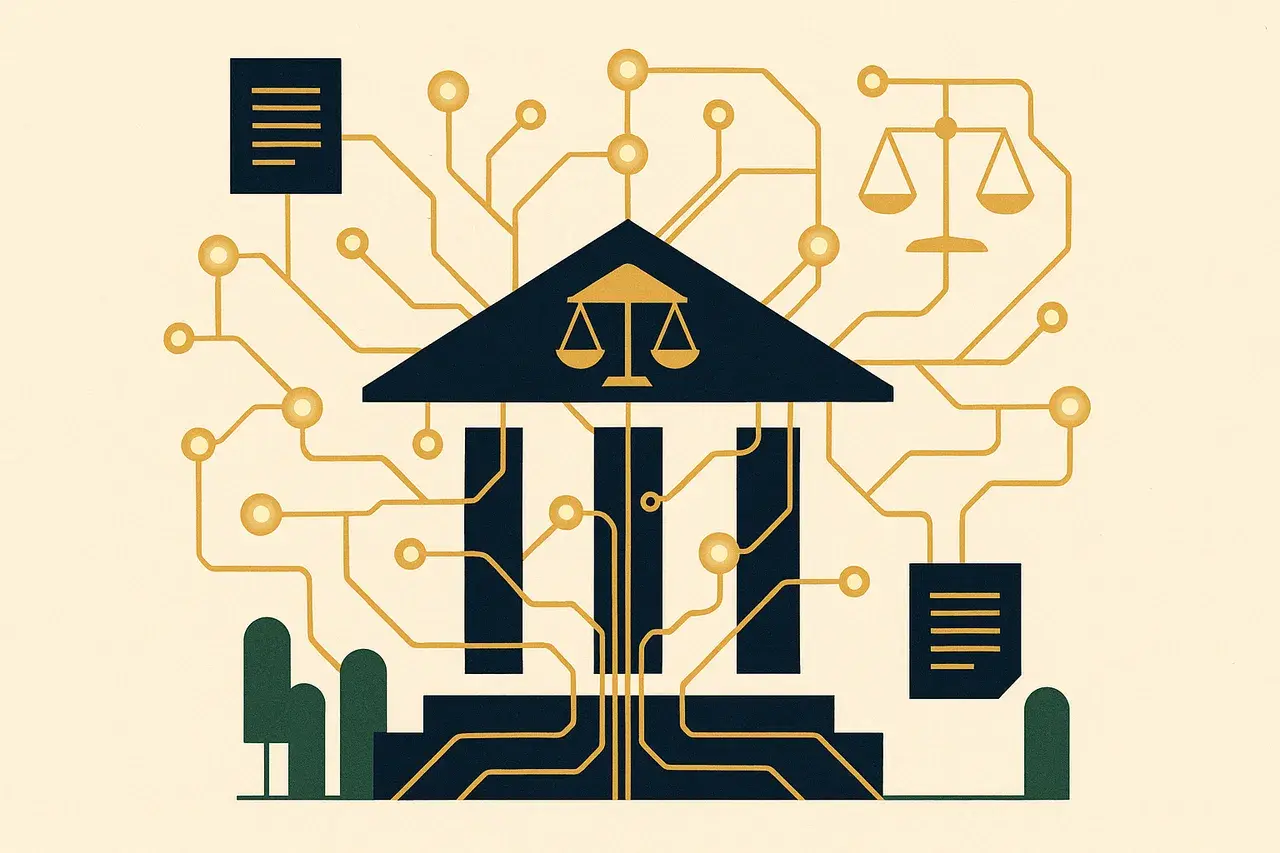
A quiet but significant idea is gaining traction in legal technology circles: the law firm that learns. Every matter a firm handles contains structured knowledge, precedent language, negotiation outcomes, and risk patterns. For most of legal history, that knowledge lived in the heads of senior lawyers or in folders that no search tool could interrogate properly. AI legal technology is beginning to change that, and the implications for both law firms and their clients are more profound than a simple productivity story.
The concept is straightforward in theory. Each completed matter feeds a model. The model improves its predictions, its drafting suggestions, and its risk flags. The next client benefits from the accumulated experience of every prior engagement. Speed increases not because lawyers work harder, but because the system remembers better than any individual can. This is not science fiction; it is the direction several forward-thinking firms and in-house legal teams are already moving.
Where Contract Lifecycle Management Fits the Picture
Contract lifecycle management sits at the centre of this evolution. CLM software has existed for over a decade, but early platforms were largely repositories with workflow automation bolted on. The AI generation of CLM is different in kind, not just degree. Modern contract lifecycle management AI can read a counterparty's draft from the perspective of the company receiving it, flag clauses that deviate from that company's own playbook, and suggest redlines in the organisation's preferred drafting style.
The learning dimension matters here. When a legal team accepts or rejects a suggested redline, that signal trains the underlying model. Over hundreds of negotiations, the system develops a nuanced picture of what that specific organisation will accept on, say, limitation of liability or data processing terms. This is AI legal knowledge management in practice, not in promise. The result is a CLM platform that compounds in value the longer it is used, rather than depreciating like a software licence.
What AI Contract Review Actually Does for Legal Teams
Legal teams often ask what AI contract review means in practice, as opposed to in a vendor brochure. The honest answer is that it handles the well-defined, repetitive analytical work that consumes associate and paralegal time without adding proportionate value. Checking that a non-disclosure agreement contains a mutual confidentiality obligation, confirming that governing law aligns with the agreed jurisdiction, and flagging an unusually long liability cap: all of these are tasks a well-configured AI contract review tool can complete in seconds.
What AI does not yet do reliably is exercise the kind of contextual commercial judgement a senior lawyer brings to a high-stakes acquisition agreement or a novel regulatory question. The honest take on legal AI adoption is that it works best as an amplifier of human expertise rather than a replacement. Legal teams that treat it as a junior reviewer, one that is tireless and consistent but still supervised, tend to capture the most value.
The Adoption Reality for In-House and Law Firm Teams
Adoption of AI tools for legal teams remains uneven. Large in-house departments at technology companies and financial institutions have moved quickly, partly because they have the data volume to make machine learning genuinely useful and partly because they face relentless pressure to reduce external legal spend. Law firms face a different incentive structure. Historically, efficiency gains in a billable-hour model reduce revenue. The firms embracing AI legal technology most enthusiastically tend to be those shifting toward fixed-fee or value-based arrangements, where speed directly improves margin.
For mid-market firms and smaller in-house teams, the barrier is less philosophical and more practical. Integrating a CLM platform with existing document management systems, training staff to trust AI suggestions rather than ignore them, and maintaining clean data for the model to learn from all require sustained investment. Legal technology trends in 2025 and beyond will likely show a widening gap between organisations that have made that investment and those still operating on manual review and shared drives.
How Adira Approaches the Learning-Model Problem
Adira is built around the premise that a contract platform should know three things simultaneously: how a specific company prefers to write, what a given contract says from that company's vantage point, and what the law of the relevant jurisdiction requires. Those three layers, voice, perspective, and law, are what allow AI contract drafting tools to produce output that is genuinely usable rather than generic.
The learning dimension enters when the platform accumulates a company's negotiation history. Accepted positions, rejected clauses, and preferred fallback language all become part of a proprietary playbook that improves with each new contract. This is the self-improving model applied to contract lifecycle management, and it is what distinguishes a platform from a sophisticated word processor. For legal teams evaluating contract automation software, the question worth asking is not only what the tool does today, but how it improves with use.
An Honest Assessment of Where Legal AI Stands
The legal AI market is producing genuinely useful tools, but it is also producing a great deal of noise. Not every platform that claims machine learning capabilities is delivering meaningful improvement over rule-based automation. Legal teams owe it to themselves to ask vendors pointed questions: what data trains your model, how is client data isolated, and what does the system do when it encounters a clause type it has not seen before?
The evolution of law firms into learning institutions is real and underway. The pace of that evolution will depend less on the technology itself, which is advancing rapidly, and more on whether legal teams build the internal habits and data discipline that allow AI legal technology to deliver on its promise. The firms and departments that do that work now will hold a compounding advantage. Those that wait for a perfect, fully turnkey solution may find the gap has become difficult to close.
Frequently asked questions
- What does AI contract review actually do?
- AI contract review analyses contract text against a predefined playbook, flags clauses that deviate from acceptable positions, and suggests redline language in the reviewing party's preferred style. It handles repetitive analytical tasks such as checking governing law, liability caps, and confidentiality obligations far faster than manual review. It works best when supervised by experienced lawyers who validate its suggestions.
- How does contract lifecycle management software use AI?
- Modern CLM software uses AI to automate drafting, review incoming contracts from the perspective of the company using the platform, and learn from each negotiation outcome to refine future suggestions. The AI layer connects the full contract lifecycle, from initial request through negotiation, signature, and renewal, so that data from one stage informs the others.
- Are law firms actually adopting AI legal technology?
- Adoption is uneven. Large in-house legal teams and firms operating on fixed-fee arrangements have moved most quickly, because efficiency gains directly improve their economics. Mid-market and smaller teams often face practical barriers around data quality and system integration. The gap between early adopters and laggards is widening as AI platforms compound in value with use.
- What is the difference between AI contract drafting and traditional CLM?
- Traditional CLM platforms are primarily repositories with workflow automation, managing where contracts sit and who has approved them. AI contract drafting tools actively generate and revise contract language based on a company's preferred positions and style. The newer generation of CLM combines both, adding a learning layer that improves suggestions as more contracts are processed.
- How do legal teams evaluate AI tools for contract management?
- Legal teams should ask vendors how their model is trained, how client data is kept isolated from other users' data, and what happens when the AI encounters unfamiliar clause types. They should also assess whether the platform integrates with existing document management systems and whether it improves measurably with use rather than remaining static after deployment.
Sources
See how Adira drafts in your voice and reads contracts from your side.
Explore the showroomWorking through a contract like this? Weave is Adira’s free tool to read, mark up, and connect any contract in your browser — no account needed.
Try Weave — free