legal tech
AI Contract Review Tools in 2025: What Legal Teams Need to Know Before Adopting
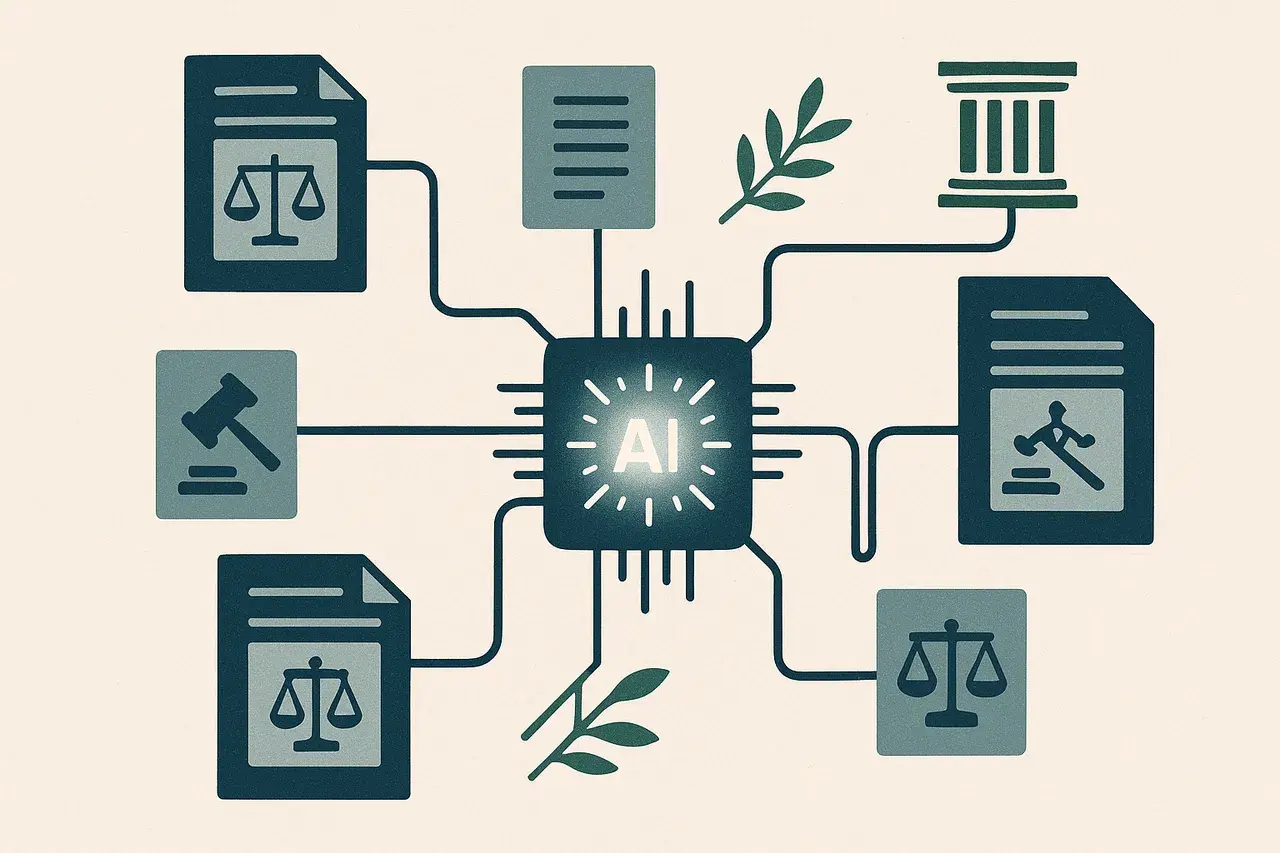
The AI Contract Tool Landscape Is Getting Crowded
The pace at which new AI contract review tools are entering the market has accelerated sharply over the past eighteen months. Events such as Legal Innovators New York, which draws practitioners, vendors and in-house counsel together each autumn, have become a useful barometer for where the sector is heading. Platforms like Spellbook, Vera and a growing cohort of contract analysis tools are each carving out positions in a market that, only a few years ago, was dominated by legacy document management systems with modest automation features.
For legal teams trying to make sense of the noise, the central question is not whether AI belongs in the contract workflow. It does. The more useful question is which capability gap you are actually trying to close, and whether a given tool closes it reliably.
What These Tools Actually Do Inside a Contract Lifecycle
AI contract review tools operate at different stages of the contract lifecycle, and understanding those stages matters before any procurement decision. The lifecycle runs from request and drafting, through negotiation and redlining, to execution, storage, ongoing obligation management and renewal.
Drafting-focused tools, including AI contract drafting platforms built on large language models, help legal teams generate first drafts in a consistent house style. Review-focused tools scan incoming contracts and flag deviations from a preferred playbook. Obligation management tools read fully executed agreements and surface deadlines, notice periods and renewal windows.
Some platforms attempt to cover the entire lifecycle. Others do one stage exceptionally well. Neither approach is inherently superior. A 50-person in-house team negotiating high volumes of commercial agreements has different priorities from a boutique firm reviewing real-estate portfolios.
Where Spellbook and Vera Fit the Picture
Spellbook has positioned itself primarily as a drafting and redlining assistant, working inside Microsoft Word and drawing on GPT-class models to suggest clause language and respond to negotiation context. Its value proposition is speed at the redlining stage, which is where junior lawyer time is most heavily consumed.
Vera, by contrast, has focused on the post-signature side of the lifecycle, helping organisations understand what they have already signed and tracking compliance obligations across large contract portfolios. Artificial Lawyer noted the platform's appearance at Legal Innovators as part of a broader wave of "practical AI" tools moving beyond novelty into genuine workflow integration.
The distinction matters for buyers. If your bottleneck is drafting volume, a Spellbook-style tool addresses it. If your risk lies in obligations buried in historical contracts, a Vera-style tool is the more relevant answer. Adira's own approach is to combine both orientations: drafting in your company's voice from day one, while reading contracts from your side of the table and applying jurisdiction-aware legal knowledge throughout.
The Honest Adoption Challenges Legal Teams Face
Adoption of AI legal technology is not primarily a technology problem. It is a change management, data quality and governance problem.
Three friction points come up consistently across legal departments evaluating these tools. First, contract data is rarely clean. Legacy agreements live in email threads, shared drives and multiple document management systems. Any AI tool is only as good as the corpus it can access. Second, legal teams are rightly cautious about hallucination risk. AI contract review tools can miss non-standard clauses or generate plausible but inaccurate summaries. Verification workflows must be built around the tool, not assumed away by it. Third, procurement cycles inside legal departments tend to be slower than in commercial functions, partly because risk tolerance is lower and partly because IT and information security reviews add time.
The vendors who succeed in this environment are those who offer transparent accuracy benchmarks, clear data residency documentation and implementation support that acknowledges these realities rather than glossing over them.
What to Evaluate Before You Buy Any AI Contract Tool
Before committing budget to any AI contract review or drafting platform, legal teams should work through a short but rigorous checklist.
Start with jurisdiction coverage. A tool trained predominantly on US contract law will perform less reliably on English law agreements or civil-law jurisdictions. Ask vendors for specific evidence, not general claims. Next, examine the playbook configuration process. How long does it take to encode your organisation's preferred positions? Is it self-serve or does it require vendor professional services? Then consider integration. Does the tool connect to your existing document management system, e-signature platform and matter management software, or does it create a parallel workflow that lawyers will quietly abandon?
Finally, interrogate the output format. A contract AI that produces a summary no one reads has delivered no value. The output must fit naturally into how your team actually makes decisions.
The Conference Circuit as an Early-Warning System
Legal Innovators New York, alongside events like CLOC, Legalweek and Lex Machina's user conferences, serves a practical function for legal ops professionals: it compresses the vendor landscape into a navigable form. Seeing multiple tools demonstrated in close succession, and hearing from practitioners who have already deployed them, accelerates the internal education process considerably.
The trend visible across the 2025 conference season is a shift from AI tools marketed on capability to AI tools competing on reliability, auditability and integration depth. That is a healthy maturation. Legal teams should welcome it, and use the competitive pressure it creates to ask harder questions of every vendor they speak to, including us.
Frequently asked questions
- What is the difference between an AI contract review tool and a contract lifecycle management platform?
- An AI contract review tool typically focuses on reading, analysing or redlining individual agreements, often at the negotiation stage. A contract lifecycle management platform covers the full journey from request and drafting through execution, obligation tracking and renewal. Some modern CLM platforms now embed AI review capabilities directly, blurring the distinction.
- How accurate are AI contract review tools?
- Accuracy varies significantly by vendor, contract type and jurisdiction. Most tools perform well on standard commercial clauses but can miss highly negotiated or jurisdiction-specific provisions. Legal teams should request benchmark data from vendors and build human verification steps into any AI-assisted workflow rather than relying on AI output without review.
- Is Spellbook good for contract drafting?
- Spellbook is well regarded for drafting assistance and redlining inside Microsoft Word, particularly for teams handling high volumes of commercial agreements. Its strength is speed at the negotiation stage. Teams with complex multi-jurisdictional needs or specific house-style requirements should test it thoroughly against their actual contract types before committing.
- How long does it take to implement an AI contract tool in a legal department?
- Implementation timelines range from a few weeks for lightweight drafting assistants to several months for full CLM deployments requiring data migration, playbook configuration and IT security review. The biggest variables are the quality of your existing contract data and how much customisation the tool requires to reflect your organisation's preferred legal positions.
- What should legal teams ask AI contract software vendors before buying?
- Key questions include: which jurisdictions does the model perform reliably in; how is playbook configuration handled and how long does it take; where is contract data stored and processed; what accuracy benchmarks can the vendor provide for your specific contract types; and how does the tool integrate with your existing document management and e-signature systems.
See how Adira drafts in your voice and reads contracts from your side.
Explore the showroomWorking through a contract like this? Weave is Adira’s free tool to read, mark up, and connect any contract in your browser — no account needed.
Try Weave — free